by Scott Katz | Oct 15, 2024 | Cannabis Packaging Law State Guides
While medical marijuana in California has been legal for some time, the recreational industry is still up and coming. Therefore, your business needs to be aware of California cannabis packaging regulations.
These laws are in place for a few specific reasons. They help potential buyers:
Your inability to follow these laws can also result in various legal consequences. Therefore, we invite you to follow along as we discuss California’s cannabis compliance packaging.
Why Do You Need to Follow Cannabis Packaging Laws?
Cannabis packaging laws are essential for buyers to determine if a product is right for them. More specifically, labels often require specific information to provide buyers with knowledge of what’s in a product (i.e. THC count).
In California, only a dispensary can package and sell marijuana. This product must also be in an envelope or a container that says “intended for sale.” It must also include all the required information (see below).
Since cannabis is still federally illegal, packaging laws vary from state to state. Still, you need to follow some universal regulations. Below, we’ve laid out both types of laws here to ensure your California cannabis flower packaging is up to code!
California’s Cannabis Packaging and Label Guidelines
Laws for cannabis packaging in California are split into the following three articles. These are found in Subchapter 5 by the Office of Manufactured Cannabis Safety (OMCS):
Article 1. General Provisions
The requirements in this section shall apply to finished cannabis products and shall not apply to cannabis or cannabis products that are transferred between licensees for the purpose of further processing or packaging.
40401. Release to Distributor as Finished Product.
Before the release of a product to a distributor, a licensee shall ensure that the product is in finished form and labeled/packaged in its final form for sale at a dispensary.
Article 2. Labeling Requirements §40403. General Provisions.
(a) Any information required to be listed on a label shall be written in English.
(b) A label shall be unobstructed and conspicuous.
(c) All required label information shall be unobstructed and conspicuous.
40405. Primary Panel Labeling Requirements.
(a) The label for a cannabis product shall include a primary panel with the following information:
(1) The identity of the product in a text size reasonably related to the most prominent printed matter on the panel;
(2) The words “cannabis-infused” immediately above the identity of the product in bold type and a text size larger than the text size used for the identity of the product;
(3) The cannabis product symbol as prescribed in Section 40412;
(4) The net weight or volume of the contents of the package;
(5) The THC content and CBD content for the package in its entirety, expressed in milligrams per package;
(6) The THC content and CBD content per serving, expressed in milligrams per serving; and
(7) The content of other cannabinoids or terpenes per serving if such information is verified by the certificate of analysis issued by a licensed testing laboratory under Business and Professions Code section 19344.
(b) The primary panel text must be in type size no less than 6-point font and be about the size of the primary panel and container.

40408. Informational Panel Labeling Requirements.
(a) The label for a medical cannabis product shall include an informational panel with the following:
(1) The licensed manufacturer and its contact number or website address;
(2) The date of manufacture;
(3) Each of the following statements:
(A) “SCHEDULE I CONTROLLED SUBSTANCE.”
(B) “KEEP OUT OF REACH OF CHILDREN AND ANIMALS” in bold print.
(C) “FOR MEDICAL USE ONLY.”
(D) “IF PREGNANT OR BREASTFEEDING, CONSULT A PHYSICIAN PRIOR TO USE.”
(E) “THE INTOXICATING EFFECTS OF THIS PRODUCT MAY BE DELAYED BY UP TO TWO HOURS.”
(F) “THIS PRODUCT MAY IMPAIR THE ABILITY TO DRIVE OR OPERATE MACHINERY, PLEASE USE EXTREME CAUTION.”
(4) A list of all product ingredients in descending order of predominance by weight or volume;
(5) If an edible product contains an ingredient, flavoring, coloring, or an incidental additive that bears or contains a major food allergen, the word “contains,” followed by a list of the applicable major food allergens;
(6) If an edible product, the names of any artificial food colorings contained in the product;
(7) If an edible product, the amount, in grams, of sodium, sugar, carbohydrates, and total fat per serving;
(8) The lot number;
(9) Instructions for use, such as the method of consumption or application, and any preparation necessary before use;
(10) The product expiration date, “use by” date, or “best by” date; and also
(11) The unique identifier.
(b) The informational panel text shall be in a type size of no less than 6-point font and about the size of the primary panel and container unless there is an insufficient area on the container available to print all the required information in a type size of no less than 6-point font. In such a case, the label shall include the warning statements required by paragraph (3) in a type size of no less than 6-point font, and the product shall be accompanied by supplemental labeling that includes all of the information required by this section. The text of the supplemental labeling shall be no less than 8-point font.
40410. Labeling Restrictions.
The label shall not contain any of the following:
(a) Claims that the manufactured cannabis or cannabis product was grown in a California county when the cannabis was not grown there.
(b) The name of a California county unless the cannabis was grown there.
(c) Content that is or designed to be attractive to individuals under the age of 21, including but not limited to:
(1) Cartoons;
(2) Any likeness to images, characters, or phrases that are popularly used to advertise to children; or
(3) Any imitation of candy packaging or labeling.
(d) False labeling information. Labeling is false if it is false or misleading in any particular.
(e) Claims of health benefits or other physical benefits.
40412. Cannabis Product Symbol.
The primary panel of a medical cannabis product shall be marked, stamped, or otherwise imprinted with the cannabis product symbol directly on the package.
(a) The symbol shall replicate the following in form and color:
(b) The symbol shall be no smaller in size than half (.5) inch by half (.5) inch and shall be printed legibly and conspicuously.
Article 3. Packaging §40415. Packaging.
As per law, a package used to contain a cannabis product shall adhere to the following requirements:
(a) The package shall protect the product from contamination and shall not expose the product to any toxic or harmful substance.
(b) The package shall be tamper-evident, which means that the product shall be packaged in a container within which a product is sealed so that the contents cannot be opened without obvious destruction of the seal.
(c) The package shall be child-resistant, which means the package shall be designed or constructed to be significantly difficult for children under five years of age to open or otherwise obtain access to the product contained therein within a reasonable time, and shall not be difficult for normal adults to open or obtain access to the product contained therein. A package shall be deemed child-resistant if it satisfies the standard for “special packaging” as outlined in the Poison Prevention Packaging Act of 1970 Regulations (16 C.F.R. §1700.1(b) (4)).
(d) The package shall not imitate any package used for products typically marketed to children.
(e) If an edible product, the package shall be opaque.
(f) If the package contains more than one serving of cannabis product, the package shall be re-sealable so that child resistance is maintained throughout the life of the package.
Need help navigating California’s cannabis packaging laws? We’re here to help! At Custom 420, we ensure all our custom packaging is designed to match state laws and regulations.
Not sure where to begin? We invite you to reach out through our contact form.
Frequently Asked Questions
How to package and sell cannabis edibles in California?
The details of California’s cannabis edibles packaging laws are detailed above. However, this state has some of the most stringent laws for packaging edibles.
What information must be in cannabis packaging in California?
The main things you need on a cannabis package are the product, its weight, and the universal symbol for CA-licensed cannabis products. However, as our guide entails, there is more to California’s cannabis packaging laws.
by Scott Katz | Oct 11, 2024 | Cannabis Packaging Law State Guides
As the cannabis market continues to evolve, so do laws and regulations. As of this time, these products remain one of the strictest regulated. And Alabama cannabis packaging laws are no exception to this strictness.
Still, the laws are in place for a reason. Imagine walking into a store and finding various brands of the same product. The first thing you’ll do is check the label to ensure you know exactly what you’re purchasing.
While cannabis remains federally illegal, more and more states are legalizing it. As of this time, Alabama has a medical program that allows the sale of cannabis to qualifying patients. However, these sales must meet the state’s requirements.
So, what are these requirements? Throughout this article, we’ll take a deeper look at Alabama’s cannabis packaging laws.
Does Your Cannabis Product Follow Packaging Laws?
Cannabis packaging laws are put in place for both consumers and manufacturers. Still, their primary purpose is to help consumers:
- Identify with a brand
- Provide information about what’s in a product
- Make a purchasing decision
Admittedly, Alabama has some of the strictest laws for their medical cannabis packaging. Within the state, only registered sellers and pharmacies are allowed to sell medical marijuana. On top of this, these containers all require a label that says “intended for sale.”
Alabama’s Cannabis Packaging Laws and Label Requirements
Within the majority of U.S. states, your cannabis packaging is required to have labels that indicate:
- Chemical information (i.e. THC and CBD content)
- Strain information
- Dates of cultivation
- Expiration date
- Manufacturing
- Necessary warnings
- Required logos
- Lab-testing information
- License bath or serial number
However, Alabama also has its own set of rules and regulations. To begin, only qualifying patients (or their caregivers) are allowed to purchase marijuana products. These can only be accessed through state-registered pharmacies (or dispensaries).
On cannabis packaging, there are two required symbols:
Minor-Appealing Label – To warn consumers about the hazards of cannabis, this logo ensures child safety.
Universal Symbol – Indicates that your product may contain tetrahydrocannabinol (THC).
Furthermore, packaging cannot be designed for minors. In other words, you cannot have a cartoon or colorful label that children may find attractive. Companies must also mention whether or not a product is safe for pets.
Conditions for Logo’s Appearance
It is strictly prohibited to use distorted, unclear, stretched, or recreated logos as it might confuse or mislead people. The logo needs to be red and black on a light-colored background.
Moreover, they shouldn’t be too small to be seen clearly. Clear warning logos and labels also speak for brand authenticity.
Additional Packaging Requirements
Per 538-x-6-.05, labels and packaging are also must abide by the following:
1. A Processor must properly package its approved medical cannabis products as follows:
(a) Packaging and containers must be child-resistant.
(b) Packaging and containers must be tamper-evident.
(c) Packaging and containers (or labels, see below) must identify the Professor and product type.
(d) Packaging and containers must not be attractive to minors.
(e) Packaging and containers must be designed to minimize appeal to children.
(f) Packaging and containers must contain any false statement or statement that advertises health benefits or therapeutic benefits of medical cannabis.
2. A Processor must properly label its packages of medical cannabis as follows:
(a) Labels must be securely attached to or imprinted on the accompanying packaging.
(b) Labels must be clear and contain print of a size and quality so as to be legible to the average patient or caregiver with a sixth-grade education.
(c) Labels must identify the product type (pills, tinctures, transdermal patches, etc.).
(d) Labels must contain lot and batch numbers.
(e) Labels must contain the name of and a license identification number for the Cultivator.
(f) Labels must contain the name of and a license identification number for the Processor.
(g) Labels must identify the cannabinoid content and potency of the product.
(h) Labels must identify the amount, number or count of the product in the package to which they are attached.
(i) Labels must contain the universal state symbol approved by the Commission, printed in color at least one-half inch by one-half inch in size.
(j) Labels must contain the words “Keep out of reach of children.”
(k) Labels must contain a digital image or QR Code for purposes of tracking medical cannabis products and must interface with the Statewide Seed-to-Sale Tracking System.
(l) Labels, or if space is not available, a package insert, must contain the following: “WARNING: This product may make you drowsy or dizzy. Do not drink alcohol with this product. Use care when operating a vehicle or other machinery. Taking this product with medication may lead to harmful side effects or complications. Consult your physician before taking this product with any medication. Women who are breastfeeding, pregnant, or plan to become pregnant should discuss medical cannabis use with their physicians.”
(m) Labels must not be attractive to minors.
(n) Labels must not contain any false statement or statement that advertises the health benefits of therapeutic benefits of medical cannabis.
Alabama has yet to identify only two hard and fast rules about packaging and label laws. Still, a few aspects shouldn’t be ignored at any cost. Any company that is producing authentic and legal products:
- Mention ingredients clearly.
- Mention the net quantity of a product and the ingredients in it.
- Labels allergens that might cause a problem for allergy-prone people.
- Discuss nutrition facts for people who consider strict diet schedules.
- Produce opaque packaging.
Such practices help to build your brand reputation.
Mastering Alabama cannabis packaging laws can be tricky and some brands may not know where to begin. That’s where we come in!
At Custom 420, we design packaging and labels that ensure you meet state compliance. Want to learn more? We invite you to reach out through our contact form.
by Scott Katz | Oct 8, 2024 | Cannabis Packaging Law State Guides
Own a cannabis business in the Keystone State? Not sure of the rules and regulations? Pennsylvania cannabis packaging laws are to ensure:
- Brand Identity – Allows customers to quickly understand who you are and what your products are about.
- Essential Information – What’s inside the product (i.e. cannabinoid count, general warnings, etc.).
- Resolution – Decide whether or not the product is right for them.
You need more than a high-quality product to capture customer attention. If you want your business to stand out and avoid legal troubles, you also need to know Pennsylvania’s cannabis packaging laws and regulations.
Do Cannabis Products in My State Follow All Packaging Regulations?
Cannabis packaging and labeling laws are in place for both buyers and sellers:
- For buyers, it ensures that they know exactly what they’re receiving from a product and whether or not it’s right for them.
- For sellers, it’s to ensure they meet all federal and state compliance laws.
In Pennsylvania, only a registered dispensary can package and sell marijuana. It must be in an envelope or container that mentions “intended for sale” with a label that discusses the required information (see below).
Since cannabis is still federally illegal, you must also follow some universal regulations. To avoid confusion, we’ve identified both federal and state guidelines.
Standard Label Requirements:
- The minimum amount or net weight of the package
- The license, batch, and serial number of the cultivation facility
- Chemical info (THC, CBD potency)
- Strain info (Indica, Sativa, or Hybrid)
- Dates (cultivation, testing, expiry, etc.)
- Necessary Warnings
- Child-proof packaging
- Tamper-proof packaging
- Re-sealable packaging
- Mandatory Universal logo/symbol
- Optional “Not Safe for Kids” logo
- Dimensions and color of the logo
- Other additive or contaminants info on the label
Pennsylvania Cannabis Packaging Laws and Label Requirements
Pennsylvania follows strict compliance when it comes to the dispensing of marijuana and derived products. Within the state, caregivers and dispensaries must also ensure a product is only for sale to a qualifying patient.
Cannabis products must have an icon or logo to indicate cannabis packaging from other packaging. Therefore, to meet this indication, a consignment that holds marijuana must have the universal symbol on its container.
The universal symbol is mandatory to slap on each cannabis parcel. It features a red triangle over a black text that says ‘Contains THC.’ It also has a black marijuana leaf in the center.
The other symbol is optional though equally important. It says “Not Safe for Kids” and fit into a red octagon.
Furthermore, the color and size of the symbol are to avoid confusion and reflect full label compliance. When used on the marketing layer, the universal and optional symbols/ icons must be reproduced in black and red.
Not to mention, the container may not have any depiction of the product, cartoon characters, or images – except the establishment’s logo. It is not acceptable in the Marijuana Legalization Act to use a logo that is recreated, distorted, pixelated, and stretched. To follow full compliance, you also must not change the icon color or use it on a dark background.
Packaging and Labeling Requirements
As per law, the following must apply to all Pennsylvania cannabis packaging:
(a) A grower/processor shall package and label at its facility each form of medical marijuana prepared for sale. The original seal of a package may not be broken, except for quality control testing at a laboratory, for adverse loss investigations by the Department or by a dispensary that bought the medical marijuana.
(b) A grower/processor shall package the medical marijuana in a package that minimizes exposure to oxygen, and that is:
(1) Child-resistant.
(2) Tamper-proof or tamper-evident.
(3) Light-resistant and opaque.
(4) Resealable.
(c) A grower/processor shall identify each lot of medical marijuana with a unique identifier.
(d) A grower/processor shall obtain the prior written approval of the Department of the content of any label to be affixed to a medical marijuana package. Each label must:
(1) Be easily readable.
(2) Made of weather-resistant and tamper-resistant materials.
(3) Be conspicuously placed on the package.
(4) Include the name, address, and permit number of the grower/processor.
(5) List the form, quantity, and weight of medical marijuana included in the package.
(6) List the single dose THC and CBD content of the medical marijuana in milligrams (mg).
(7) Contain an identifier that is unique to a particular batch of medical marijuana, including the number assigned to each lot in the batch.
(8) Include the date the medical marijuana was packaged.
(9) State the employee identification number of the employee preparing the package and packaging the medical marijuana.
(10) State the employee identification number of the employee shipping the package, if different than the employee described in paragraph (9).
(11) Contain the name and address of the dispensary to which the package is to be sold.
(12) List the date of expiration of the medical marijuana.
(13) Include instructions for proper storage of the medical marijuana in the package.
(14) Contain the following statements: “This product is for medicinal use only. Women should not consume during pregnancy or while breastfeeding except on the advice of the practitioner who issued the certification and, in the case of breastfeeding, the infant’s pediatrician. This product might impair the ability to drive or operate heavy machinery. Keep out of reach of children.”
(e) Labeling by a grower/processor of any medical marijuana may not:
(1) Bear any resemblance to the trademarked, characteristic, or product-specialized packaging of any commercially available candy, snack, baked good, or beverage.
(2) Bear any statement, artwork, or design that could reasonably mislead any person to believe that the package contains anything other than a medical cannabis finished product.
(3) Bear any seal, flag, crest, coat of arms, or other insignia that could reasonably mislead a person to believe that the product has been endorsed, manufactured, or used by any state, county municipality, or any agency thereof.
(4) Bear any cartoon, color scheme, image, graphic, or feature that might make the package attractive to children.
Now that you know Pennsylvania cannabis packaging laws, you may not be sure where to begin. However, that’s where we come in!
At Custom 420, we curate cannabis packaging that ensures it follows your state’s guidelines. Furthermore, we guarantee labels that follow all requirements.
If you want to learn more, we invite you to reach out through our contact form.
by Scott Katz | Oct 4, 2024 | Cannabis Packaging Law State Guides
If you operate in the Garden State’s marijuana industry, it’s essential to understand New Jersey cannabis packaging laws.
Why? Beyond the legal compliance, packaging and labeling laws are put in place for a reason. They’re for customers to identify with products immediately, get essential information, and determine whether or not it’s worth the buy.
The more innovative packaging laws are, the more convenient they are for customers. Overall, they make shopping a stress-free experience.
Do My Cannabis Products Follow State Regulations?
Those who sell marijuana products need to follow packaging laws for the sake of customer convenience. Failure to follow these laws can result in legal consequences.
In New Jersey, only a registered dispensary can package and sell marijuana in an envelope or a container mentioning “intended for sale.”
The label on all the packaged marijuana is a must. It also needs to mention the necessary information, such as strain type and weight in ounces or units. Highlighting the strain type is essential as it gives a quick overview of the product’s chemical profile.
Although there are some universal regulations related to cannabis and its derived products, New Jersey Has its own set of rules. We’ll be sure to document both.
These are the crucial factors of state-by-state guidelines on cannabis and cannabis products:
- The minimum amount or net weight of the package
- The license, batch, and serial number of the cultivation facility
- Chemical info (THC, CBD potency)
- Strain info (Indica, Sativa, or Hybrid)
- Dates (cultivation, testing, expiry, etc.)
- Necessary Warnings
- Child-proof packaging
- Tamper-proof packaging
- Re-sealable packaging
- Mandatory Universal logo/symbol
- Optional “Not Safe for Kids” logo
- Dimensions and color of the logo
- Other additive or contaminants info on the label
New Jersey Cannabis Packaging Laws
New Jersey follows strict compliance with state laws and regulations for the dispensing of marijuana and derived products. These include:
First, we need package identification. The icon or logo is the first indicator to separate a cannabis product package from regular ones. To indicate that a consignment holds marijuana, all sellers should paste universal symbols to label the packages or containers.
As per law, the container may not have any depiction of the product, cartoon characters, or images – except the establishment’s logo.
The universal symbol is mandatory to slap on each cannabis parcel. It features a red triangle crowned over a black-colored text that says ‘Contains THC,’ stamped with a black marijuana leaf in the center.
The other symbol is optional though equally important that says “Not Safe for Kids” and is enclosed in a red octagon.
The color and size of the symbol are very important to avoid confusion and reflect full compliance in labeling. When used on the marketing layer, the universal and optional symbols/ icons must be reproduced in black and red.
It is not acceptable in Marijuana Legalization Act to use a logo that is recreated, distorted, pixelated, and stretched. To follow full compliance, you must not to change the icon color or use it on a dark background.
As per New Jersey’s cannabis packaging and labeling laws, you need to have the following on your product:
- The ATC–plant cultivation shall place a legible, firmly affixed label containing the information specified below on each package of medical marijuana it dispenses to an ATC–dispensary and shall not dispense medical marijuana if the package does not bear the label.
The label required under the above shall contain the following:
- The name and address of the alternative treatment center–plant cultivation that produced the medical marijuana;
- The quantity of the medical marijuana contained within the package;
- The date that the ATC–plant cultivation packaged the content;
- A sequential serial number, lot number, and bar code to identify lot associated with manufacturing and processing;
- The cannabinoid profile of the medical marijuana contained within the package, including THC level not to exceed 10 percent;
- Whether the medical marijuana is of the low, medium, or high strength strain;
- A statement that the product is for medical use by a qualifying patient and not for resale; and
- A list of any other ingredients besides medical marijuana contained within the package.
Labeling shall be clear and truthful in all respects and shall not be false or misleading in any particular.
- A label containing any statements about the product other than those specified in this chapter shall contain the following statement prominently displayed and in boldface type: “This statement has not been evaluated by the Food and Drug Administration. This product is not intended to diagnose, treat, cure, or prevent any disease.”
Do you operate a cannabis business in New Jersey and are not sure where to begin? That’s where Custom 420 comes in!
Our team can produce packaging and labeling that ensures you meet the Garden State’s full compliance. Want to learn more? Reach out through our contact form.
by Scott Katz | Oct 1, 2024 | Cannabis Packaging
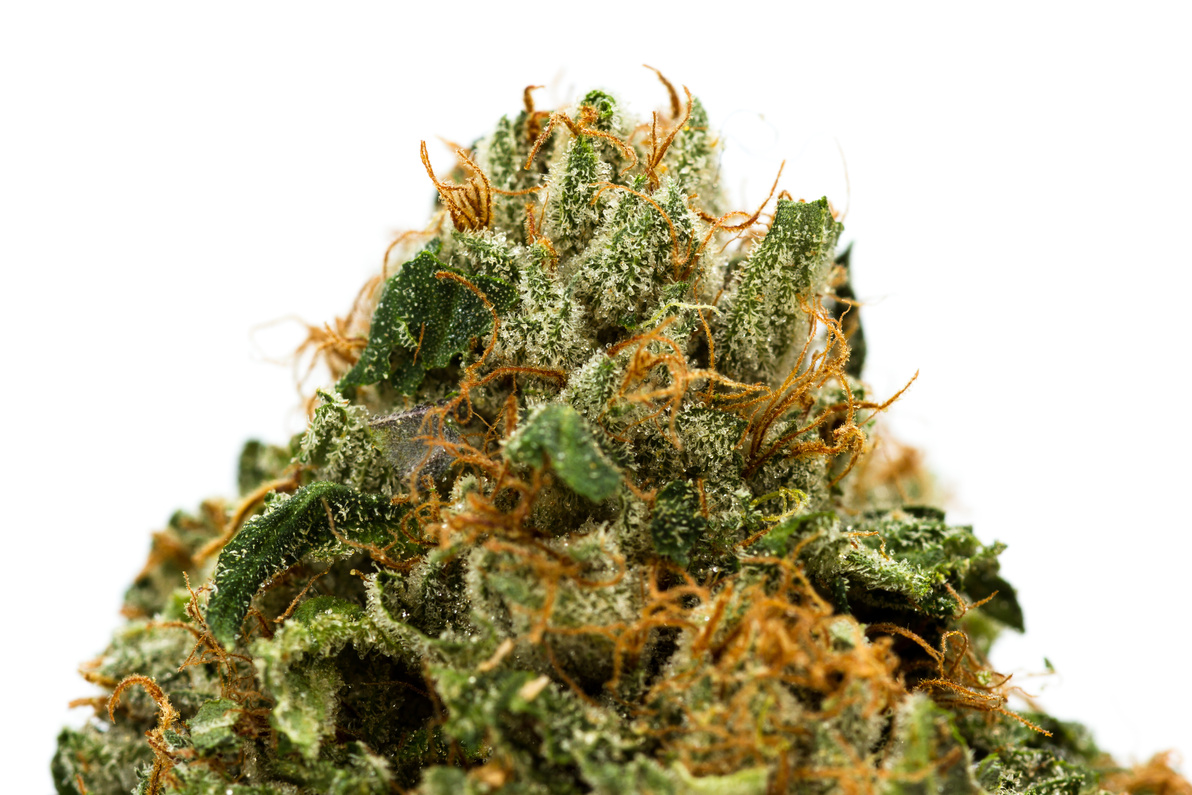
The simple answer is yes, marijuana can be cured in Mylar bags. However, this cannabis packaging option may not be an ideal solution for everyone. That ultimately depends on the size of your harvest and how much money you want to put into your curing process.
What is Curing?
In simple terms, curing is the preservation of cannabinoids and terpenes in cannabis buds. It protects the flavor, aroma, and potency of your product.
This process involves placing them in an airtight container once the flower is harvested and dried. You have a few options when it comes to curing weed, including:
- Mason jar
- Ceramic
- Metal
- Wood
However, plastics should be avoided since they absorb tetrahydrocannabinol (THC). You’ll naturally lose the potency of a product through this absorption.
Regardless of your container choice, you must maintain humidity between 55-65% and place it in a dark room. This environment protects your cannabis from UV light, which can break down cannabinoids and terpenes.
Once or twice a day within the first week, you’ll need to open your jar for a few minutes. After the first week, you’ll want to do this every few days. This process allows moisture to leave your container and oxygen to replenish.
The curing process takes between two weeks and a month. However, you can cure buds for longer.
What are Mylar Bags?
Mylar bags are a type of packaging designed from a polyester film. They’re used for a variety of purposes, including:
- Food Storage – Mylar has played an essential role in long-term food storage as it protects contents from light, air, and moisture. Common foods include pasta, beans, rice, jerky, and dried fruits.
- Pharmaceuticals – Since medication, tissue samples, and seeds can be sensitive to changes in moisture and oxygen, Mylar has helped to preserve such contents.
- Other Uses – Other products used in Mylar include camping meals, emergency food, gardening products, household cleaners, and cosmetics.
Part of what makes Mylar so effective is it can be heat sealable, have tear notches, and come in various sizes and styles (i.e. zipper bags). These varieties have made it an adaptable packaging solution in the cannabis industry, often meeting state compliance laws.
Can Marijuana Be Cured in a Mylar Bag?
Yes! You can cure cannabis in a Mylar bag. Mylar prevents cannabis from degrading thanks to its protection from light, oxygen, and moisture. As such, it can cure your product after a harvest.
Still, you want to consider whether or not Mylar is the right option for you. Admittedly, most of this packaging is small and made for personal use (i.e. 3.5 Mylar bags for weed). While larger options (i.e. 1 pound Mylar bags) are available, you need to consider:
- The size of your harvest
- Whether or not this is the most cost-effective option
If you only grow marijuana for personal use, Mylar is a great choice. However, if you have a business operation, there may be better fits for you.
Other Curing Options
To cure weed, you simply need an airtight container. You want to ensure this container is filled to 75% capacity and contains a small hygrometer (or humidity pack) to monitor levels.
The most common cannabis curing option is jars. However, other options exist, including curing machines and containers. These options may speed up the process but are also more expensive.
Final Word
Mylar weed bags are an option for curing, but they may not be the option for you. Your decision here ultimately comes down to the size of your operation and how much money you want to invest in the curing process.
If you decide to go with Mylar bags for weed curing, Custom 420 has various options to choose from. We invite you to reach out through our contact form to learn more.
Weed Mylar Bags FAQs
How long is weed good for in Mylar weed bags?Cannabis can stay fresh in a Mylar bag for many months or even years.
How to seal Mylar weed bags?If you want to seal weed in a Mylar bag for curing purposes, you’ll want to use a heat seal. You can do this with a(n):
– Iron (or hair-straightening apparatus)
– Sealer machine
– Sealing strip
To further the curing process, you can also add Oxygen Absorbers to the package.