The cannabis industry has exploded in popularity, bringing forth an urgent need for standardized packaging and labeling. If you’re in the business of these products, mastering cannabis compliance labels isn’t just about following the rules. It’s about building customer trust and protecting your brand from cost penalties. Let’s break it down.
Key Regulations for Cannabis Labeling Compliance
Regulations may vary based on your jurisdiction, but some essential elements apply almost everywhere. Here’s what you need to include to ensure cannabis labeling compliance:
Product Information– Clearly state the product name, strain, and type.
THC and CBD Content– Accurately list percentages of tetrahydrocannabinol (THC) and cannabidiol (CBD) to keep consumers informed.
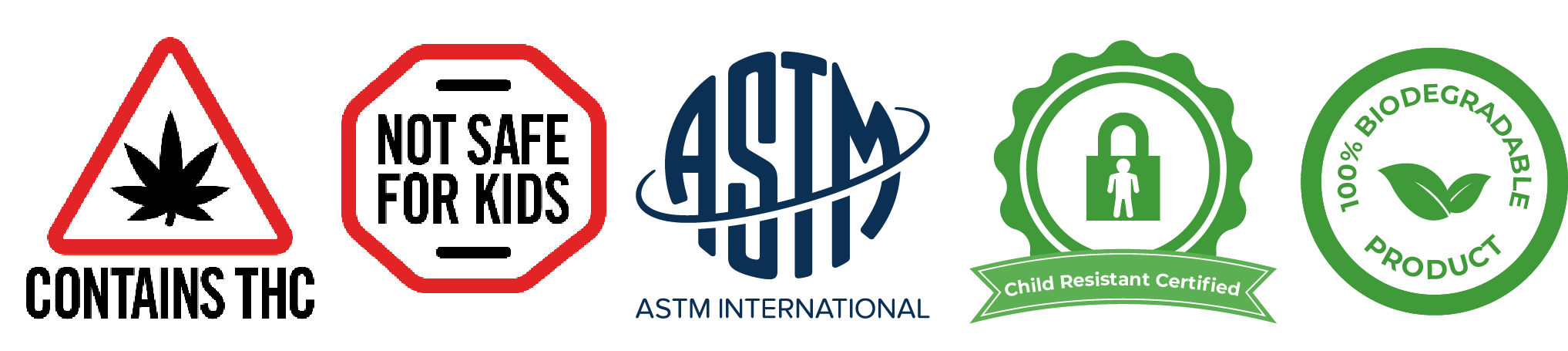
Safety Warnings– Include potential side effects, proper usage instructions, and legally required warning symbols.
CA Prop 65Warning– If your cannabis products aresold in California, a CA Prop 65 warning may be required to notify consumers about potential exposure to harmful chemicals.
How to Ensure Compliance for Cannabis Labels
Staying compliant with cannabis label regulations requires a proactive approach. Consider the following steps:
Stay Up to Date on Regulations– Laws change frequently, so it’s essential to monitor federal and state regulations. Each state has a unique set of rules regarding cannabis packaging and labels. Therefore, you’ll want to check with local regulatory agencies.
Consult with Compliance Experts– If you’re unsure whether labels meet all the requirements, work with professionals who specialize in cannabis compliance. A legal expert can help you avoid costly mistakes.
Regularly Audit and Update Labels– Schedule periodic reviews of your labels to ensure they still align with the latest laws. Compliance isn’t a one-time effort, it’s an ongoing process.
Best Practices for Cannabis Compliance Labels
Beyond meeting legal requirements, well-designed labels can enhance your brand and improve customer trust. To create labels that are compliant and effective, consider the following:
Use Clear, Readable Typography– Your labels should be easy to read, especially important details like THC and CBD content.
Include Symbols that Matter– Regulatory bodies require specific symbols, such as the universal cannabis warning icon. Make sure yours are accurate and properly placed.
Add QR Codes– These can link to additional information, such as lab results, ingredient details, or safety guidelines, enhancing transparency.
Choose Durable Materials– Labels should withstand handling, moisture, and temperature changes to prevent fading and peeling.
Common Cannabis Labeling Mistakes to Avoid
Even small errors on a label can result in hefty fines or recalls. Here are some pitfalls to watch out for:
Misprinting THC/CBD Content– Even minor discrepancies can lead to regulatory action.
Using Misleading Imagery– Avoid cartoonish designs or anything that might appeal to children.
Ignoring Font Size Requirements– Regulations may specify minimum font sizes crucial for information. Double-check your local jurisdiction.
Final Word: Stay Ahead in Cannabis Label Compliance
The cannabis industry is evolving rapidly, and staying in line with cannabis compliance labels is essential for success. By keeping up with regulations, designing clear and informative labels, and avoiding common pitfalls, your brand can stand out for the right reasons.
Cannabis compliance refers to adhering to state and federal laws regarding the cultivation, sale, packaging, and labeling of cannabis products. This ensures customer safety and regulatory adherence.
What are the requirements for CBD labels?
CBD product labels must include the following:
Cannabinoid content
Ingredient lists
Manufacturer details
State-specific disclosures
Warning statements
Can you put your own label on CBD products for retail?
Yes, but only if the product meets all cannabis labeling compliance regulations. Private labeling is common, but retailers must ensure their labels meet legal requirements before selling.
Spot UV, also known as spot gloss or spot varnish, isa print finishing method that adds a shiny, raised coating to specific parts of a design.This coating is cured with ultraviolet (UV) light, making the selected areas (such as logos or text) stand out with aglossy finish.
Spot UV works best when used on a matte or uncoated surface, creating a strong contrast.It’s often for:
Jar labels to give them a more polished and professional appearance.
We invite you to follow along as we take a deeper look into this printing technique and whether or not it’s right for your products.
Key Takeaways
What Spot UV Is– A printing technique where a glossy, UV-cured coating is applied to specific areas (like logos or text) for a raised, eye-catching finish.
Why It Matters for Branding– Spot UV adds luxury, tactile contrast, and visual focus, especially effective on custom packaging like mylar bags and cannabis jar labels.
How to Use It Effectively– Use on smooth, thick substrates with a precise mask file; ideal for accentuating logos, titles, and brand elements without overwhelming the design.
How Does Spot UV Work?
The process begins during the design stage. A separate black-and-white file, called a UV mask, is created to show exactly where the glossy coating will go. This file acts as a guide, marking which areas (such as text, logos, or patterns) will receive the UV treatment.
Next, the full-color design is printed on the material using either digital or offset printing. This creates the base layer that includes all the images, colors, and text. Once the base layer is printed, the UV mask is used to apply a clear varnish to the marked spots. This is done through screen printing or with a plate, depending on the method used.
After the varnish, the print goes under ultraviolet (UV) lights. These lights cure the varnish instantly, turning it into a solid, glossy finish. The result is a high-shine effect that contrasts sharply with the matte or uncoated background.
Finally, the printed piece is trimmed, folded, or enhanced with other finishes like embossing. Each item is then checked for accuracy to make sure the UV coating aligns properly with the design.
Why Use Spot UV?
Spot UV printing offers both style and function. It helps designs stand out, feels good to the touch, and protects the surface. Here’s a closer look at the main reasons brands choose this technique:
Visual Impact and Contrast
Spot UV highlights specific parts of a design (like logos, text, or graphics) by making them glossy against a matte background. This creates depth and draws attention to key elements, making your print look sharper and more professional.
Tactile Engagement
The raised glossy texture gives people something to feel as well as see. This physical detail adds sensory interest and makes the piece more memorable.
Durability
This technique isn’t just for looks. The UV coating adds a layer of protection that helps resist:
Moisture
Scratches
Fingerprints
Smudges
Fading
Fast and Eco-Friendly
UV coatings cure instantly under ultraviolet light. They contain no volatile organic compounds (VOCs), so they’resafer for the environmentand speed up production.
Stronger Brand Appeal
Spot UV sends a clear message of quality. When used on packaging, business cards, or promotional materials, it can help your brand look polished and high-end, without the need for more expensive materials.
Styles and Combinations
Spot UV has multiple uses to achieve unique visual and textural effects.
One popular method isBlind Spot UV, where the gloss is applied without any ink underneath. This creates a subtle, almost hidden pattern that becomes visible only when light hits it at the right angle. It’s a sleek way to add detail without overwhelming the design.
Another common approach is to apply the technique overmatte lamination, matte varnish, or soft-touch finishes. The glossy areas stand out boldly against the dull background, creating a rich contrast that both looks and feels high-end. This combination enhances depth and gives printed materials a premium, polished finish.
Tips for Effective Spot UV Design
Less is more– Highlight only the most important elements. Overusing it can make a design feel busy or messy.
Choose the right substrate– Use smooth, thick paper or cardstock. Avoid thin or textured materials, which may not hold the coating well.
Ensure alignment precision– Include crop marks and check that the print and varnish layers are in proper alignment. This avoids shifting or misprints.
Plan for effect– Spot UV works best on logos, titles, and small accents. Avoid using it on large areas or small, detailed text that may lose clarity.
Incorporate a mask in prepress– Always provide a separate, high-contrast mask file using solid black to indicate coated areas.
Spot UV vs. Other Finishes
Finish
Gloss
Texture
Durability
Cost Level
Spot UV
High
Raised
Excellent
Mid-high
Emboss/Deboss
None
Deep
Good
High
Foil Stamping
Metallic
Smooth
Good
Mid-high
Full UV Coating
High (full)
Flat
Very Good
Mid
Matte Coating/Lamination
None
Soft/Flat
Good
Mid
Spot UV brings a glossy tactile layer and durability inexplicably beyond embossing alone, with lower cost than full foil or full UV.
Cost and Limitations
Spot UV printing comes with added costs due to the extra steps required. Namely, this includes a digital mask file. Still, the added cost is minimal and provides you with a premium look, something worth considering when you’re managing your packaging budget.
The process also works best on flat, smooth surfaces. Textured or thick materials can cause the coating to apply unevenly, which may affect the final result.
In terms of production time, Spot UV adds steps like mask preparation and UV curing, which can extend turnaround. It’s important to plan and allow for extra time, especially when working with larger orders or tight deadlines.
Final Word
Spot UV is a powerful finishing technique that adds shine, texture, and a premium feel to printed materials and packaging.
It offers strong visual contrast, a pleasing tactile experience, and durable protection, all while using an eco-friendly curing process. This makes Spot UV a popular choice for brands looking to stand out in crowded markets, such as cannabis or luxury products.
Think you want to incorporate spot UV into your cannabis packaging? Unsure where to begin? Custom 420 Supply is here to help! We invite you to reach out through ourcontact pageto learn more.
Frequently Asked Questions
Is spot UV safe to use on cannabis packaging?
Yes. Spot UV is purely a surface treatment applied to the outermost layer of printed packaging. It doesn’t come in direct contact with the cannabis product and is safe when applied correctly by a professional print partner.
Can I use spot UV on flexible materials like mylar bags?
Absolutely. Spot UV works well on flexible packaging like mylar bags, especially when the surface has a matte or soft-touch lamination underneath. It provides contrast and texture that grabs attention on shelves.
Does spot UV increase the cost of cannabis packaging?
It can slightly increase production costs due to the extra print step and UV curing process. However, the perceived value and branding impact often outweigh the added expense, especially for premium or limited-edition products.
Will spot UV hold up in humid or refrigerated environments (i.e. edibles or infused drinks)?
Yes, Spot UV is moisture-resistant and adds an extra layer of protection to the print. For products that require cold storage, it’s a great choice because it won’t smudge or deteriorate like some finishes.
Welcome to the Custom 420 Supply custom cannabis packaging blog! We’ve set out to help change the stigma of this amazing crop and how its packaged! The days of using zip-lock bags are no longer acceptable. If you want your brand to stand out from the rest it takes more than growing or producing the best products. Now people want to see how it looks on a retail shelf or behind a glass case.
When it comes to custom cannabis packaging, it can be overwhelming to determine where to start and what’s the right fit for your brand. However, that’s why we started this business and this blog. We want to help those getting started or fine-tuning a coordinated line for an established brand. Navigating your way through this world can be confusing and costly and we’re here to help! We pride ourselves on customer service and building long-term partnerships for years to come. Our main goal is to help you Brand Your Grow and Grow Your Brand!
We set out to keep all of our brand imagining down to earth and realistic. Helping our clients understand the process and allowing them to be hands-on to bring visions to life. We’ve seen many of the suits at various trade shows offering cosmetic and food packaging as “cannabis packaging.” While packaging can be repurposed, don’t be fooled by said “Cannabis packaging specialists” who have not smoked a joint since the 70s. They’re out of tune with your customer base.
Stay tuned for informative and fun videos, articles, demos, and much more from a team that truly lives on both sides of the industry. Also, all videos will be certified 100% ego-free! Sure, we see organic and natural products all over… but ego-free? That can be hard to come by these days in the cannabis industry. So hopefully we can help you find success without rubbing it in others’ faces. But if that is how you get down, ultimately you can still steal ideas from our blog and rub them in people’s faces! (But not recommended by us!)
This is a multipronged question with multiple answers. The correct way to package your products will differ from company to company. Ultimately, the best cannabis packaging coincides with yourbrand’s identityand product quality. You might still ask, “What the hell does that mean?”
Let me explain. The old Lamborghini salesman’s sweatpants scenario comes into play here. If you’re not familiar, it’s in essence to portray your brand in line with the quality of your product. For instance, if you were going to buy a Lamborghini and the salesman is wearing stained sweatpants, no matter how much you want the car you’ll most likely consider taking your business elsewhere. The reason? You’re afraid to purchase that kind with a poor upfront presentation.
Comparing Cannabis Packaging to Product Quality
I’m here to say that the same goes for cannabis packaging. Let’s discuss a scenario with two companies:
You’reCompany Aand think you have the bestlive resin cartridgeon the market. You have a great product and it tests well. You spend a good money to refine your product and can command top dollar for it. When most companies reach this point, they run into the dilemma of not wanting to add any other major costs.
You package it in a plastic blister pack with a paper insert printed at Staples. It makes its way into the shop and you get a few very enthusiastic/educated connoisseurs who rave about the product. Still, being sold as a high-end product, its shelf appeal is not apparent in the cheaper packaging. At first glance, customers will think it’s just an overpriced lower-end product. If you get it in people’s hands, it speaks for itself. However, getting it in the right hands, or enough hands, can be the hardest part.
Now let’s take the example of someone with a middle-of-the-road product,Company B. It is not bottom of the barrel nor is it being sold that way. But its cannabis packaging is in a magnetic box with foil andsharp colors. The type of box someone would hold on to after the purchase.
Some of the high-end customers buy it based on the packaging. The true connoisseurs will appreciate Company A as they’re not fooled by packaging or the cost difference. A few of the lower-end customers buy it as a special purchase. However, as company B, you have now found your sweet spot in the middle. The everyday consumer loves that it’s a quality product for the price and looks higher-end. Despite having a lower-cost product, Company B ends up with a much larger percentage of the market share and continues to grow faster.
You might say, “So what company A has crap packaging? The product is better and the customers must be sheep!” While that might be the case,packaging will continue to play an integral role in marketing as this industry continues to grow.
Customers will lean on the brands that jump out at them. Again, with great products, you’ll likely always have a core following. But if you want to take that next step in growth, your packaging has to coincide with your brand.
Price Comparisons
The last comparison we will make is a cost vs selling price analysis. Company A sells their carts for $80 – they have a $50 profit margin and it costs them $0.30 per package. They sell 1000 in the first 3 months, netting them: $49,700 (minus all the fees, etc.).
Now let’s look at Company B. Company B sells their carts for $65 each – they have a $40 profit margin and go all out and spend $2 per package. But with the packaging appeal, they sell 1750 units in the first three months, netting them: $66,500.
You can see that despite having a profit margin of nearly $15 more and a better product, by avoiding packaging costs, Company A limited its reach. Their core customer group will grow exponentially slower. So, even though they still have a good reputation, their sales are not on par with it.
Final Word
Lastly, this isn’t a pitch to promote BAD PRODUCT IN EXPENSIVE PACKAGING. If that’s what you took from this, then you have missed the point. At the end of the day, a product’s quality will speak for itself regardless of the packaging and you’ll have a level of success or failure based on this ALONE.
Still, packaging is the second piece of the puzzle. If you have a terrible product in a nice package in an attempt to charge more, customers will eventually see through it. Then word of mouth of your overpriced and poor-quality product will bury you in due time. Customers might overpay the first time, but will not be fooled again by the tricks!
At this point, you’ve surely seen cannabis cans. If you have, it may be time to broaden your horizons. The concept is fairly new and has developed a love-hate relationship among manufacturers. Still, there is one thing we can all agree on – it’s different than how we’re used to seeing our cannabis packaged.
Cannabis cans have a few different names to them. These include:
Exploring Custom Labeled Cannabis Cans and Packaging
So, what custom options are out there when it comes to cannabis cans and creative packaging? Quite a few, actually. Whether you’re after a classic look or something sure to stand out on the shelf, the possibilities keep expanding as the industry grows.
Types of Cannabis Cans and Custom Packaging:
Standard Labeled Tins: These are your tried-and-true 100ml “tuna cans”—think Cali tins or Press tins—customized with your brand’s logo, colors, and required compliance info.
Clear Display Cans: If showing off those beautiful nugs is the name of the game, clear-lidded cans let your product speak for itself while still offering branding real estate.
Quarter Ounce (200ml) Cans: Need a larger size? The quarter ounce cans offer the same customizable flair in a heftier package.
Mylar Gas Cans: Not a “can” in the traditional sense, but airtight mylar baggies shaped to mimic mini gas cans—they’re great for branding and function, especially for pre-rolls or smaller flower portions.
Soda Can Packaging: For the novelty seekers, soda-style cans and jars (anything from 90ml to up) have become popular for those aiming to deliver a unique experience.
Custom Candy Bags & Wrappers: Edibles need love too—custom-printed, child-resistant bags and wrappers help keep everything safe and compliant while supporting vibrant branding.
Pop-up Canopy Tents: While not a packaging option for your flower, these are a staple for public events and pop-ups, custom printed to boost your presence at farmers markets or festivals.
Getting a Quote or More Info
If you’ve got a vision (or just some questions), you can easily request details on pricing, available sizes, and all the customization bells and whistles. There are options for businesses large and small, whether you’re just starting with an eighth or scaling up to serious volume.
Why Plastic Cannabis Cans Stand Out
Among all the options, plastic cannabis cans have carved out a solid fan base. The appeal? For starters, these cans are see-through—which lets consumers sneak a peek at the product before they buy, a small thrill for flower connoisseurs and the canna-curious alike.
Durability is another strong suit. Plastic cans are rugged enough for the rigors of shipping, tossing in a bag, or surviving an accidental tumble off the counter. And unlike glass, there’s no need to worry about shattering. They seal tightly, helping maintain potency and freshness, even when those nugs have been hanging out on a shelf for a while.
On top of that, there’s a certain peace of mind for growers and retailers knowing their product still smells, tastes, and feels just right—week after week. For those who value both lasting quality and seeing their stash at a glance, plastic cannabis cans keep things fresh and frustration-free.
What Are Pressitin Cans—and How Do They Work?
The Pressitin can is a unique twist on traditional cannabis packaging, and it’s been popping up everywhere from West Coast dispensaries to Instagram unboxings. Unlike the classic “tuna can” that requires machinery to seal, Pressitin cans are designed to be self-sealed by hand. Think of it as the Swiss Army knife of weed cans—when you’re ready to package your buds, you simply fill the can, snap on the bottom, and you’re good to go.
Instead of sealing the top like you would with other cans, Pressitin cans have a peel-back lid on top (just like a can of Sterno) and an open bottom that you press into place after loading your product. No special equipment, no fuss—just a satisfying snap that tells you your flower is secure for retail or personal storage.
While they’re not fully airtight like machine-sealed options, Pressitin cans are beloved for their straightforward convenience and their sleek, modern look. They’re especially handy for small-batch runs or limited-edition strains where setup time and flexibility matter more than industrial-level tamper resistance.
Machine-sealed cans, on the other hand, do require specialized equipment and are typically preferred for larger, commercial operations striving for maximum consistency and shelf life. But if you want eye-catching, simple-to-use packaging that stands out on the shelf? Pressitin cans are tough to beat.
What Makes Pressitin Cans Stand Out?
So, where do Pressitin cans fit into all this? These cans carve out a niche by offering a fuss-free, straightforward packaging solution—no heavy machinery or industrial-grade sealers required. With a quick, hand-pressed closure, they make the process of packaging cannabis flower about as hassle-free as it gets.
A few highlights of Pressitin cans:
Sealing Simplicity: Instead of wrestling with old-school canning tools, you just snap the lid into place. Easy, even for small batches or limited runs.
Visual Appeal: Pressitin cans aren’t just functional—they look the part, with a modern, stylish finish that stands out in dispensary displays.
Retail-Ready Presentation: While they aren’t perfectly airtight, these cans are perfectly suited for showcasing flower on the retail shelf with professional polish and a sense of novelty.
Pressitin cans offer a blend of ease and eye-catching design, making them an appealing go-to for brands wanting something a little different.
More specifically, we’ve teamed with Cannaster to become an official re-seller. Their product allows customers to add customized labels and designs easily. We often get questions about nitrogen backfilling and various snake oil techniques that leave some skeptical about the whole concept. While some might insist these are necessary features, we’re here to tell you they’re not.
How Many Colors Can You Include?
If you’re wondering just how many colors you can use in your custom cannabis can design, the short answer is: as many as you’d like! There are no hard limits here. Whether you want a sleek monochromatic look or a wild rainbow explosion, the full spectrum is at your disposal.
We’ve seen everything from understated black-and-gold “Cali tins” to full psychedelic palettes worthy of a Santana album cover. Whether you favor vibrant neons, pastels, metallics, or something more muted and elegant, you can mix and match colors to suit your brand and message.
Want your cans to stop customers in their tracks? Go bold. Need to project a more refined or natural vibe? Stick to earth tones or subtle gradients. Our goal—along with partners like Cannaster—is to give you the freedom to let your creativity run the show. We often get questions about nitrogen backfilling and various snake oil techniques that leave some skeptical about the whole concept. While some might insist these are necessary features, we’re here to tell you they’re not.
What Sizes of Cannabis Cans Are Available?
If you’re curious about sizing, you’re not alone. The most popular options for cannabis flower packaging tend to be 3.5-gram and 7-gram cans. Let’s break it down:
3.5-Gram (1/8 oz) Cans: These hold up to 100ml and are the industry standard for dispensaries packaging an eighth of flower. They come in both machine-seal and hand-sealable varieties. This size strikes a balance—big enough for a satisfying stash, but compact for freshness and portability.
7-Gram (1/4 oz) Cans: Stepping up in size, these accommodate 200ml and are perfect for a quarter ounce of flower. Whether you need more room for dense nugs or you’re simply stocking up, these cans deliver. Like their smaller cousins, they’re available in both machine-seal and press-seal options. And yes—edibles and gummies fit, too.
No matter which size you choose, both options offer airtight and smell-proof protection, helping to keep your cannabis looking and smelling like it just left the curing room. Custom labeling for your artwork or logo is available for every can, so your brand won’t get lost in the crowd.
Popular Cannabis Can Sizes
Now, let’s talk can sizes—because, yes, there are choices, and yes, they can make a difference. The most common can size you’ll find lining dispensary shelves is the 3.5 gram can (sometimes called the “eighth can”). With a capacity of about 100ml, these are just right for stashing an eighth of flower—making them a solid pick for the typical cannabis customer who wants freshness in a personal-sized package.
For those venturing a little bolder, there’s the 7 gram option. These 200ml quarter-ounce cans offer double the space, perfect if you’re looking to stock up or need roomier packaging for larger buds or even infused edibles. Both 3.5g and 7g cans are available in machine-sealed versions as well as hand-sealable types, so whether you’re a craft grower or running a larger operation, you have flexibility.
The airtight, smell-proof design isn’t just a marketing gimmick. These cans genuinely help protect the product’s integrity, keeping that freshly-cured aroma right where it belongs—inside the can. If you’re packaging gummies or other edibles, the 7g can offers just the right snug, secure fit.
Naturally, the choice comes down to your needs—are you going single-serve, or are you ready to share? Either way, you’ve got options.
Customization Options for Cannabis Can Packaging
Let’s talk about what really sets cannabis cans apart—the ability to customize just about everything. When you’re ready to take your flower presentation up a notch, there’s no shortage of ways to make your cans truly your own.
Lids and Labels: Most cannabis can suppliers (like Cannaster and Pressitin) offer cans that come complete with both metal lids and labels. The resealable top lid not only locks in freshness but can also showcase your custom artwork, company logo, or any eye-catching design you can dream up. Both the lid and side of the can are prime real estate for branding.
Design Support: Not a design whiz? No problem. Professional teams often help create your custom labels at no extra charge, guiding you through the creative process or handing over blank templates if you’d prefer to DIY. This ensures your brand vision shines through on every unit.
Pre-labeled and Ready to Go: For those looking to save time, many manufacturers offer cans that arrive already labeled—no need to wrestle with sticky backings or alignment issues. Just fill, seal, and they’re shelf-ready.
Flexible Quantities and Options: Whether you need labels alone (maybe for a run of special edition strains) or you’re ready to order full sets of cans with matching graphics, customization scales to your needs. Standard sizes like 3.5g and 7g are widely available with tailored label fits.
Ultimately, these customization options don’t just help your cans look professional—they allow your brand personality to take center stage, making your product pop in dispensaries or at events.
Why Branding Matters for Cannabis Packaging
Let’s face it—first impressions count, especially in the crowded cannabis market. The look of your packaging does much more than keep your flower fresh; it signals your brand’s story, professionalism, and even the quality of what’s inside. The right label or design doesn’t just get you noticed on dispensary shelves—it also builds trust and recognition with your customers. Think of it like the difference between a mystery tuna can and your favorite local craft brew: one is easily overlooked, while the other practically leaps into your cart.
A well-designed, customized label lets your products do some of the heavy lifting when it comes to marketing. Eye-catching packaging communicates your company’s personality in a split second, whether you’re aiming for sleek and modern, playful and colorful, or medical-grade serious. Plus, clear branding helps customers remember you on their next trip—no matter how many choices are competing for their attention.
By investing in branded packaging, you ensure your products stand out, support compliance, and reinforce your brand every time someone reaches for your can. And if you want to get creative or prefer to handle things in-house, label templates make it easy to tailor the look to fit your unique vibe.
Do Custom Cannabis Cans Include Lids and Labels?
Absolutely—when you order custom cannabis cans (such as those from Cannaster), both lids and labels are part of the package. Each can comes with a metal lid, which seals the contents and can be reclosed after the initial opening. You’ll also receive top and side labels, making it easy to highlight your brand’s logo or creative design. This way, your cans not only keep your product fresh but also look sharp on any display.
How to Tap Into Free Design Services for Your Cannabis Cans
Curious about how to get that head-turning label on your next batch of cannabis cans—without the extra design fee? It’s easier than you might think.
Here’s how it works:
Place your order: Start by choosing your preferred can size and quantity. Whether you call them Cali tins, tuna cans, or weed cans, pick what suits your brand.
Share your vision: After your order is submitted, you’ll be contacted directly (usually by email) to dish out details. This is your chance to talk shop—share your logo, preferred colors, design ideas, even what vibe you want customers to get at first glance.
Collaborate with designers: You don’t need to be a Photoshop wizard. An experienced design team will take your feedback and manage the heavy lifting. Your input guides the result, and you’ll get a custom draft for approval.
Finalize your look: Once you’re happy with the design, it’ll be prepped for production so your cans roll off the line looking exactly how you imagined.
It really is that simple. Think of it as having a mini creative agency at your disposal—but you’ll only pay for the cans. No headaches, no extra cost, just a standout package that gives your buds some shelf swagger.
Ordering Only Cannabis Can Labels
If you just need labels for your cannabis cans—whether it’s a 3.5g tin, a 7g sausage can, or one of the many other styles—you’re definitely in luck. You don’t have to buy the cans themselves to get a fresh set of labels.
Simply reach out to our team and let us know your can size and label needs. We’ll work with you to create custom-printed labels that fit your tins perfectly—no matter the type or batch size. Whether you’re looking to match your brand’s existing vibe or go all out with a new design, we’ve got you covered.
To get started, just request a quote and provide details about your cans and design preferences. We’ll make sure your custom labels arrive ready to slap on, making your packaging process as seamless as possible.
What if My Desired Wholesale Quantity Isn’t Listed?
No need to worry if you don’t spot the exact amount of cans or tins you need in our lineup. We know everyone’s needs are a bit different—sometimes you’re looking for a few hundred, sometimes a mountain’s worth! If your ideal quantity isn’t shown, just reach out to us directly. Our team is always up for tailoring orders, big or small, so you get precisely what fits your operation.
Whether you require a bulk shipment or have specific packaging preferences (press tins, cali tins, tuna cans—you name it), we’re happy to put together a solution that works for you. Think of it as a bespoke canning experience—made to order with the same flexibility you’d expect from our Cannaster partnership. Just drop us a line, and we’ll walk you through the options to keep your canning adventure moving smoothly.
Cannaster seals with an even PSI every time and closes it with consistent pressure to keep an airtight seal against the rubber lining. Multiple tests have held up for up to six months with many saying it helped the cure. If you do not believe us I will put it to the challenge. For those who say it’s too short of a shelf life, maybe this is not for you. It is an ideal solution for those looking to stand out from the crowd or do mixed batches. We offer a more enterprise solution if you have a larger scale.
Why Airtight Storage Matters for Cannabis
Much like a perfectly brewed cup of coffee owes its punch to a well-sealed bag of beans, cannabis flower always thanks you for a little extra care in storage. Airtight containers are a must for keeping your flower as fresh as the day it was packaged—locking in those aromatic terpenes and hearty cannabinoids while locking out air, light, moisture, and any curious noses.
Here’s what airtight storage brings to the (coffee) table:
Preserves Freshness: Exposing cannabis to oxygen speeds up the breakdown of its most prized compounds. An airtight seal keeps oxidation at bay, so you’re always greeted by vibrant, sticky buds instead of brittle, flavorless leftovers.
Maintains Potency and Aroma: Just as a rubber gasket keeps the flavor in your morning espresso, an airtight container safeguards the potent aroma and full flavor of your flower. No loss of those signature scents that make each strain unique.
Guards Against Odors: Not only does smell-proof storage keep things polite in shared living spaces, it prevents unintended “weedy” surprises for guests—or your neighbor’s inquisitive beagle.
Protects from Moisture and Contaminants: Moisture is the arch-nemesis of cannabis longevity, helping mold and mildew thrive. By sealing out humidity and airborne particles, airtight containers give your buds a long and healthy shelf life—often up to a year or more.
Just as a canister of Illy coffee or a mason jar from Ball keeps its contents pristine, storing cannabis in an airtight vessel ensures each session is as enjoyable as the first. Multiple tests have held up for up to six months with many saying it helped the cure. If you do not believe us I will put it to the challenge. For those who say it’s too short of a shelf life, maybe this is not for you. It is an ideal solution for those looking to stand out from the crowd or do mixed batches. We offer a more enterprise solution if you have a larger scale.
Are Cannabis Cans Just for Flower, or Can You Use Them for Edibles Too?
Absolutely, cannabis cans aren’t just a one-trick pony. While they’re often celebrated for keeping flower fresh and aromatic, their airtight and odor-proof design works just as well for storing and packaging edibles—think gummies, chocolates, or even infused mints. The extra space in many can styles makes them a solid pick for larger edible batches or products that need a bit more breathing room without sacrificing freshness.
So, whether it’s flower, edibles, or even a hybrid mix, cannabis cans offer reliable protection and a premium feel for a variety of cannabis products.
Advantages of Clear Cannabis Cans
Let’s talk clear cans. Clear cannabis cans have gained a lot of traction—and for good reason. These handy containers let customers see the actual flower before making a purchase, giving them confidence in what’s inside. It’s like window shopping for your buds. Being able to scope out color, density, and trichome coverage without popping open the can is a perk any experienced shopper appreciates.
Plus, the clear design doesn’t compromise freshness. The airtight seal still does its job, keeping your product safe from air, moisture, and clumsy hands, all while showing off your top-shelf flower. In an industry where visual appeal matters just as much as quality, clear cans strike a smart balance—making them a popular choice for dispensaries and craft growers who want their product presentation to work as hard as their packaging.
Pressitin vs. Machine Seal: Choosing Your Closure
A question we see often is the difference between Pressitin cans and those that require a machine seal. It all comes down to how they close—and which best meets your needs.
Pressitin cans (sometimes called self-seal tins) use a straightforward, hands-on method. There’s no equipment required—simply press the can’s bottom into place by hand. This easy approach is perfect if you’re working with small batches or just getting your feet wet with canning.
Machine seal cans, on the other hand, do need specialized equipment—a sealing machine presses the lid shut, creating a more secure, tamper-evident closure. They’re the go-to for large-scale producers who prioritize consistency and airtight seals across hundreds or thousands of units. If quality control is at the top of your list, or you’re aiming for maximum shelf life, the machine-sealed route is generally the way to go.
Both closure styles have their place in the cannabis packaging world, and the choice really depends on your operation size and what you want from your packaging.
Pressitin vs. Machine Seal Cans: What Sets Them Apart?
One of the most common questions we get is, “What’s the real difference between Pressitin (sometimes called self-sealing) cans and machine seal cans?” Let’s break it down simply:
Pressitin or Self-Sealing Cans: These are perfect if you’re working with smaller batches or want something easy. They seal up by hand—simply press the bottom in to create an airtight closure. No expensive equipment needed, which is a huge plus for startups or those launching a limited run. They’re quick, convenient, and user-friendly—think of them as the Swiss Army knife for craft cannabis canning.
Machine Seal Cans: On the other hand, if you’re moving major volume or need extra security, machine seal cans are the heavyweight champ. These require a canning machine to lock everything shut with industrial consistency. The benefit? A rock-solid, tamper-evident seal every time, ideal for larger producers who can’t risk a loose lid or for brands under strict quality control.
Ultimately, the can you choose depends on your batch size, security needs, and scale. If you’re gearing up for a hot new strain launch with an experimental small batch, Pressitin will save your arms and your timeline. If you’re thinking big—statewide distribution big—machine sealing is the way to go.
And remember, no matter which style you pick, the goal is always the same: fresh flower, happy customers, and eye-catching cannabis that stays protected from seed to sale.
Why Choose Pressitin Cans with Pre-Applied Labels?
One of the biggest advantages of opting for Pressitin cans with labels already applied is pure convenience. When those cans arrive at your door, they’re fully labeled and ready to be filled—no scrambling for labels, no last-minute application mishaps, and no time wasted. This gets your product one step closer to market, faster.
Beyond speed, pre-labeled cans mean your branding is consistent and professionally presented every single time. With our team lending a hand in label design (at no extra cost), you can be sure your packaging looks sharp and stands out on the shelf—without having to moonlight as a graphic designer.
And let’s not forget the financial angle: Buying cans that are already labeled cuts down on labor costs and reduces the risk of wasted materials due to labeling errors. That adds up to more efficiency for your operation, whether you’re doing small batches or ramping up to larger runs.
If you’re looking to take some friction—and a bit of stress—out of your supply chain, pre-labeled Pressitins might just be the move.
But check out the video and see it in action!
Can your bud! Help your brand stand out from the crowd!
You’d be surprised how more often than not, some of the best producers in this industry fall short on branding. Sure, there are the recognizable topbrand identitiesand the fanboys will be all over. But how about when you get something good but cannot determine the producer? You would go back again and again to purchase this product… but just one problem? Who the hell made it??
The time and effort it takes to produce a great product is undoubtedly a full job on its own and immensely painstaking without a large workforce.So, often that effort falls short if you cannot establish a powerful brand to solidify your place in the market. A brand to show why your product is different from what others do the same. This is where word of mouth only gets you so far in 2024. Customers now want to know the story behind your product, and the nuances of the production and ingredients that put it on the shelf in the first place. If you are one of those who can relate to this, then you have come to the right place!
A key to successful entrepreneurship is recognizing your strengths and when you need help. As much as we wish we could master every aspect of this industry, let’s be honest because that is not the reality. The bottom line is to focus on what you’re good at and be the best at it. Then use those in your circle or connections to help maintain the other areas. For those who are not good at branding, the best advice we can give you is toPREPARE!You have no idea someone has called with tons of product ready to go, but in need of thousands of containers and labels or wants you to print a design for them they drew with crayon.
Take a step back and think, “What will my production numbers be?” What are the highlights of this product and what makes it different? Can people easily find me again to purchase if they like my products? and most importantly: if it does well am I prepared to package more in a timely fashion? The moral of the story? Don’t wait until the last minute to choose your branding and packaging. Helping to determine these things ahead of time will make your road to success way less rocky!