The 2025 NECANN Cup Boston is set to bring the best of the cannabis industry for an exciting competition that highlights innovation, quality, and craftsmanship.
Running alongside the NECANN Cannabis Convention on March 21st and 22nd at the Hynes Convention Center, this event is a must-attend for cannabis professionals, enthusiasts, and businesses looking to connect, compete, and showcase their latest products. From top-tier flower to cutting-edge edibles and concentrates, the NECANN Cup is a premier platform for recognizing excellence in cannabis.
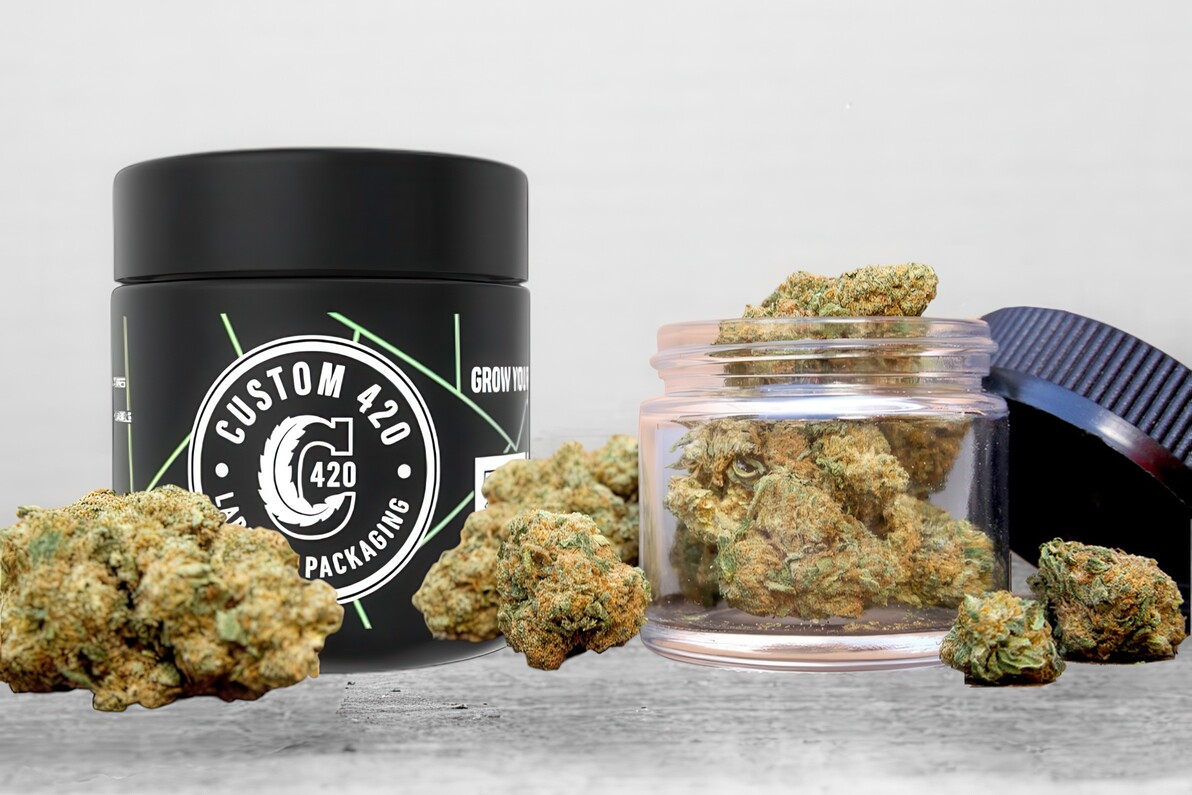
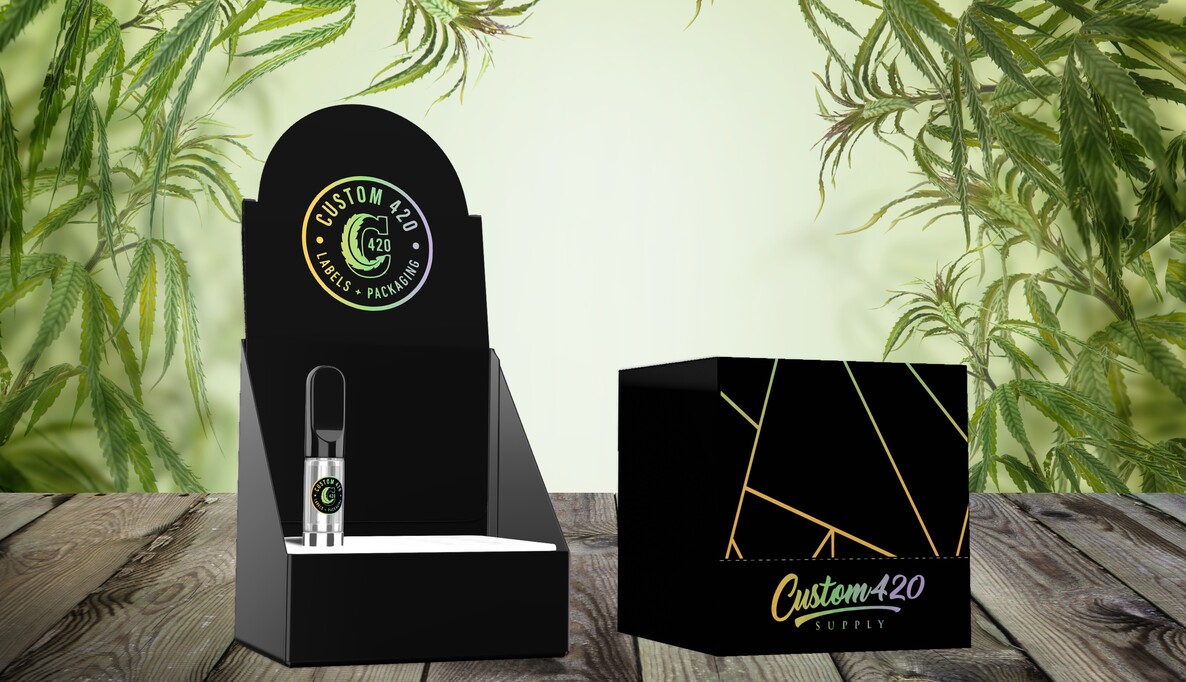
As the official packaging sponsor, Custom 420 Supply is proud to support this competition by providing high-quality packaging solutions that enhance the integrity and organization of the event. Whether you’re a competitor, attendee, or industry insider, NECANN Boston offers an unparalleled opportunity to engage with the ever-evolving cannabis market.
What is the Boston NECANN Cup?
The NECANN Cup is a third-party evaluation of the latest cannabis and cannabis products. Those deemed best are awarded the best cannabis products in New England.
This Cup runs alongside the NECANN Cannabis Convention. In short, this event takes place between March 21st and 22nd at the Hynes Convention Center. This is a B2B (business-to-business) marketing event for the cannabis industry, featuring the latest products, vendors, and technology.
If you want to attend this event, you can purchase tickets here for the following prices:
2-Day All Access – $115
2-Day Expo Hall Only – $60
Saturday All Access – $80
Saturday Expo Only – $45
Exhibitor Staff – $500
What is the Address for NECANN?
The 2025 Boston NECANN Cup at:
Hynes Convention Center
900 Boylston St.
Boston, MA 02115
This year, NECANN Boston is accepting applications for the following categories:
Hybrid flower
Indica flower
Sativa flower
Solvent concentrate
Pre-roll
Infused pre-roll
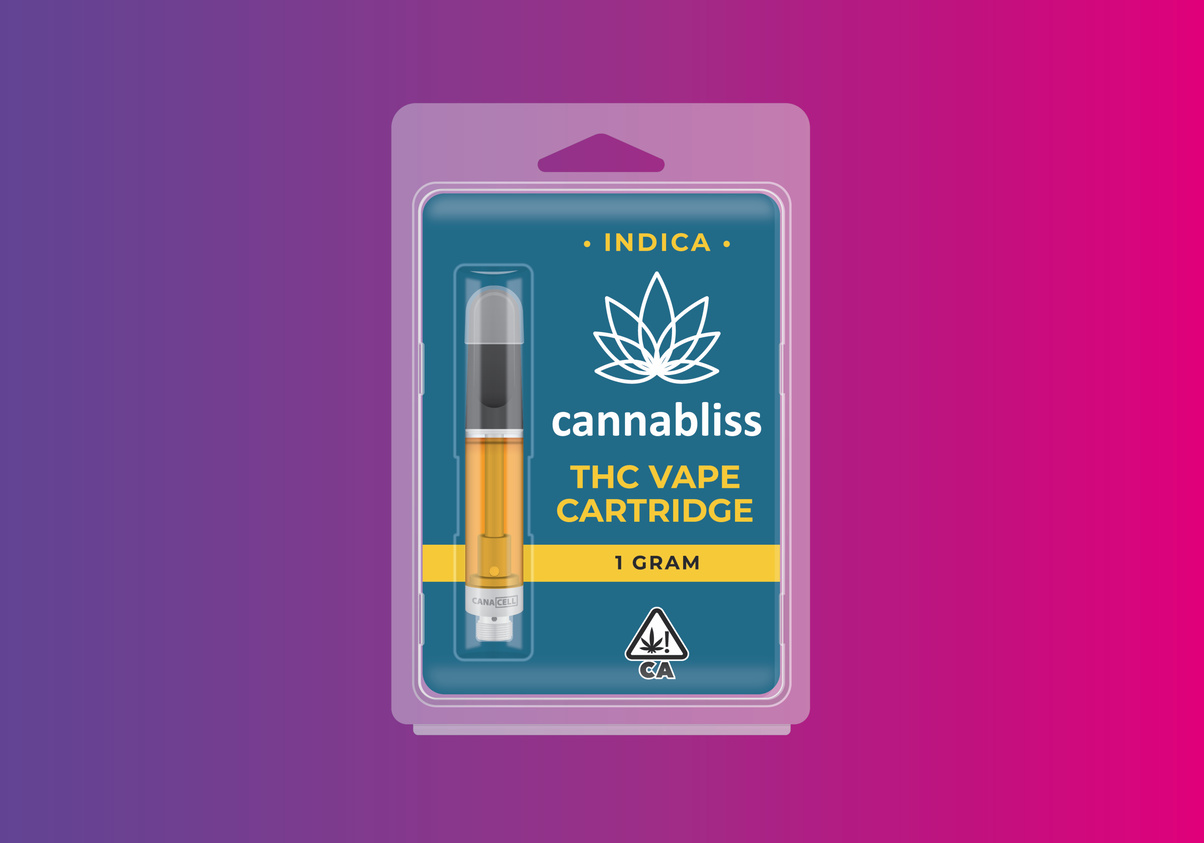
Non-solvent vape cartridge
Edible beverage/tincture
Edible chocolate
Edible gummies
Topical
Each category has different requirements for how much needs to be submitted. Therefore, if you’re interested, we highly recommend checking out NECANN’s website for specifics.
Last Year’s First-Place Winners
If you’d like an idea of what you’re up against as a cannabis business owner, here’s a snapshot of 2024’s NECANN Cup first-place winners:
Best Dispensary – Sweetgrass Botanicals Dispensary – Lee, MA
Solvent Concentrate – United Cultivation – Jelly Donuts Live Resin – Ashby, MA
Snacks/Candy – Joy Bombs – CBD 1:1 Sours – Salisbury, MA
Hybrid Flower – Advanced Cultivators – Red Runtz – Lowell, MA
Gummies – Suncrafted Cannabis – Sour Blue Raspberry Rosin Gummies – Middleboro, MA
Chocolate – Emerald Elevation Cannabis Co. – Salted Caramel + Waffle Cone Bar – Eliot, ME
Vape Cartridge – Standard Farms – Mimosa Liquid Live Rosin – Massachusetts
Topical – Peaceful Potions – Chronic Potion – Wareham, MA
Custom 420 Sponsorship
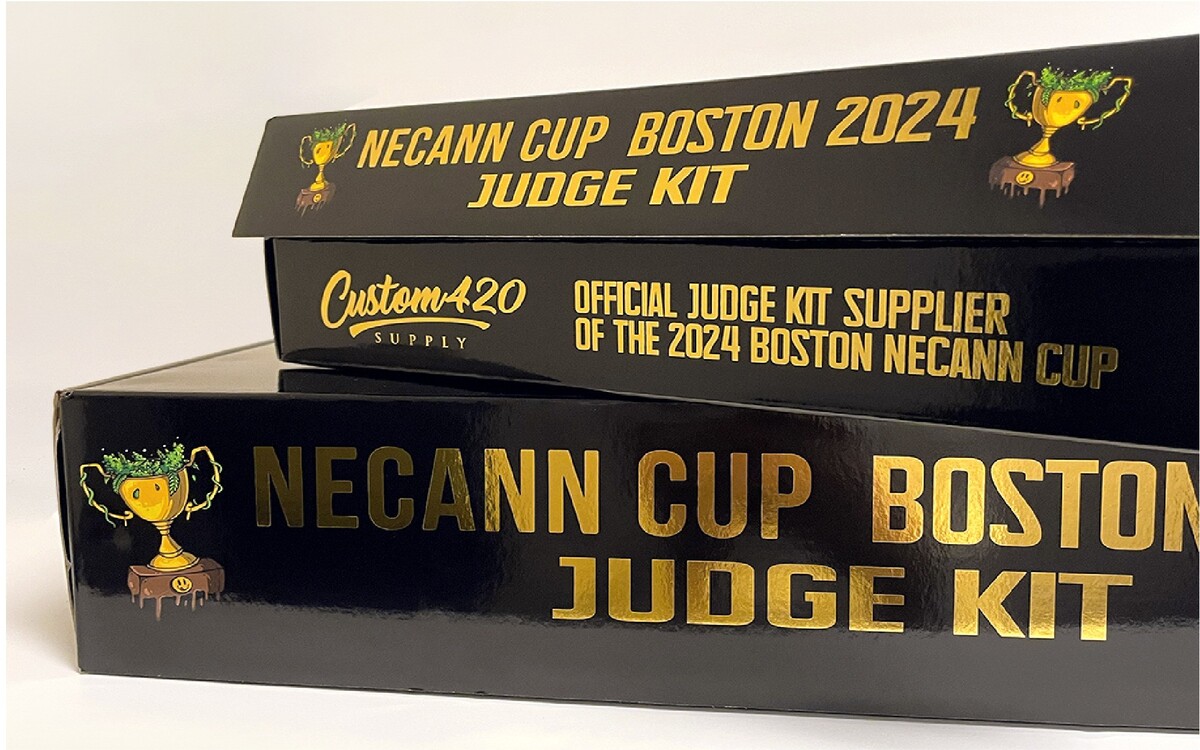
As the official packaging sponsor of the NECANN Cup, Custom 420 plays an integral role in supporting this prestigious cannabis competition. The sponsorship involves collaborating closely with Mike Clinton, the event organizer, to produce high-quality packaging solutions tailored for the event.
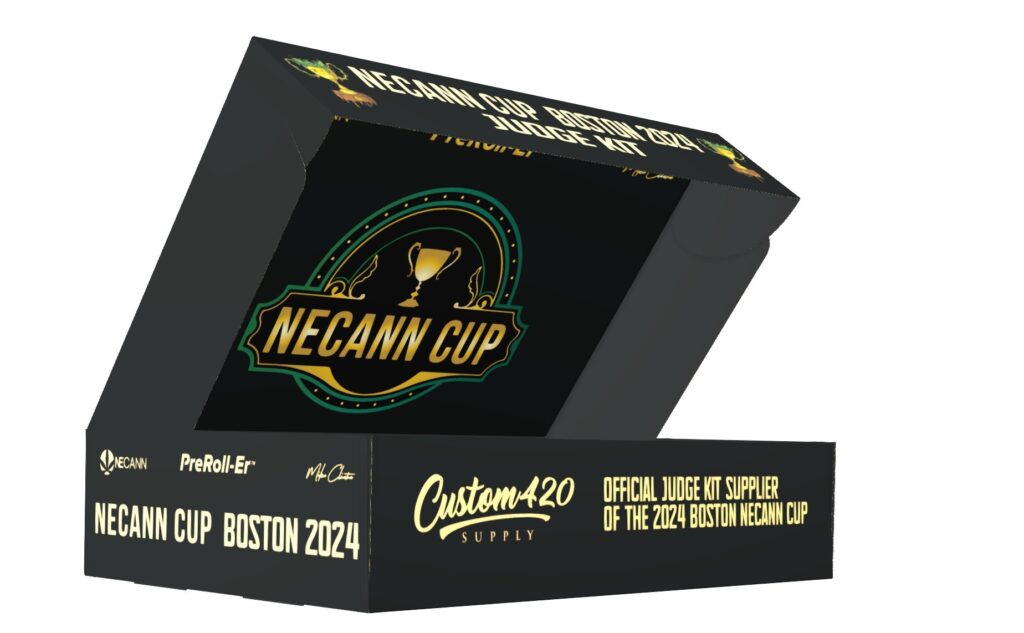
Custom 420 Supply provides large corrugated master boxes that are specifically designed to house each competition entry by category. Furthermore, custom labels are created to differentiate boxes and ensure efficient organization.
The box production process includes two different box sizes to accommodate the various competition categories. To elevate the presentation, Custom 420 incorporates a dual-finish design.
The interiors of the boxes have a matte finish with a Spot UV layer to enhance the artwork, while the exteriors boast a glossy finish complemented by a foil layer that highlights specific design elements. This meticulous attention to detail ensures that the packaging not only serves its functional purpose but also stands out visually.
Why Custom 420 Sponsors the NECANN Cup
Custom 420’s decision to sponsor the NECANN Cup stems from our recognition of the competition’s integrity and fairness. Operated in strict compliance with Massachusetts state laws established by the Cannabis Control Commission (CCC), the NECANN Cup provides an equal opportunity for all participants to showcase their talents and potentially secure a win.
The event organizer, Mike Clinton, is a respected figure in the Massachusetts cannabis community, making a significant honor for Custom 420.
Sponsoring the NECANN Cup also presents an invaluable opportunity for Custom 420 to demonstrate our production capabilities to a broad audience, including competitors, judges, and attendees. As one of the largest cannabis conventions in the country, the Boston NECANN event offers extensive exposure and the chance to connect with key players in the industry.
Fostering Community and Innovation
This year, Custom 420 looks forward to seeing a diverse array of new entries and competitors in the NECANN Cup. The event fosters a sense of community by bringing together various facets of the Massachusetts cannabis industry and beyond.
Through this sponsorship, Custom 420 aims to build meaningful connections while continuing to support the growth and innovation of the cannabis community.
Where Else Do NECANN Competitions Occur?
If you’re interested in NECANN, but don’t live in the Boston area, not to worry! The competition is held in other parts of the country at various times of year. These include:
Massachusetts Cup of Champions (Location TBA)
Registration opens 4/1/2025
Registration closes 7/23/25
Intake opens 8/1/25
Intake closes 8/7/25
NECANN New Jersey (Atlantic City Convention Center)
Registration opens 4/1/25
Registration closes 7/23/25
Intake opens 8/1/25
Intake closes 8/7/25
NECANN New York (NYS Fairgrounds)
Dates for registration TBA
Final Word
With the 2025 NECANN Cup Boston just around the corner, excitement is building for what promises to be a standout event in the cannabis industry. From recognizing the top cannabis products in New England to fostering industry connections, this competition plays a pivotal role in driving innovation and excellence.
For Custom 420, sponsoring the NECANN Cup is more than just providing premium packaging—it’s about supporting a fair and respected competition while engaging with the broader cannabis community. As we look forward to the competition, we’re eager to see the talent, creativity, and passion that define this growing industry. Whether participating or attending, the NECANN Cup is an event you won’t want to miss!
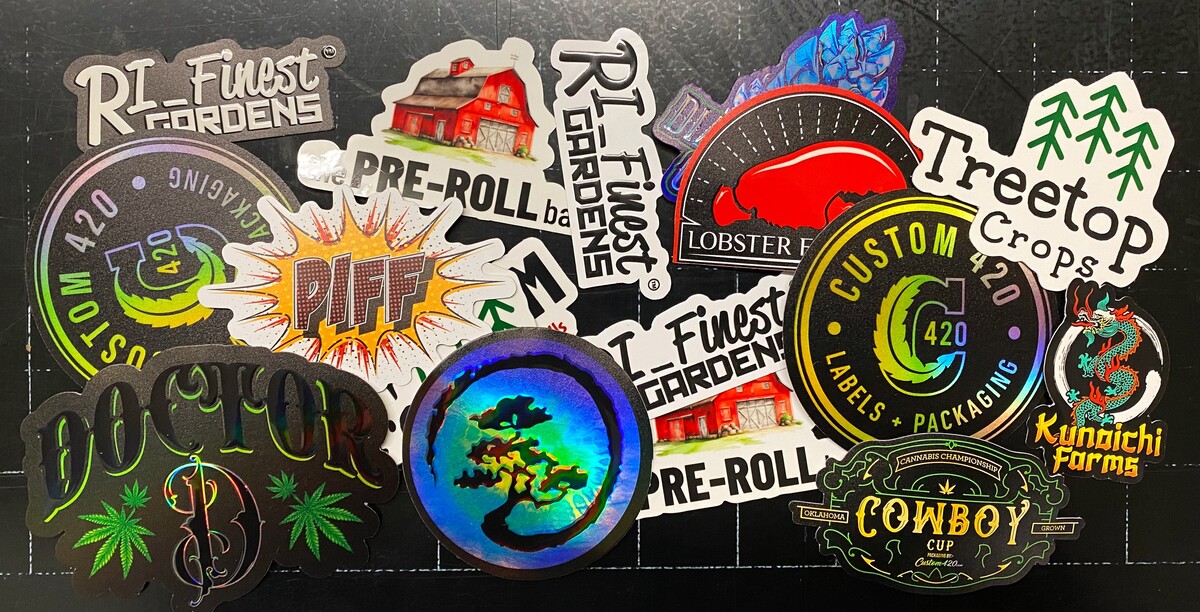
Simply put, “die-cut” means a sticker that is cut around the shape of your design. In other words, most stickers come in standard shapes (i.e. circle, square, or rectangle), whereas die-cut stickers are completely customizable to your artwork.
Brands use “die-cut” for various purposes. In most instances, it’s to show off brand identity (i.e. through a logo sticker). However, packaging can also come in these customizable cuts (i.e. die-cut boxes).
Origins of Die-Cut
Die-cutting began in the shoe industry in the mid-1800s. More specifically, it allowed holes to be punched into shoes manually to create individual sole patterns. Most were made using leather and die-cutting allowed shoemakers cost-effective mass production.
Today, die-cutting has found a variety of uses across many industries. However, in regards to cannabis, it’s often used to create unique packaging and stickers. As you’ll see, these customization elements are a great way to get customers more involved in your brand.
What are the Benefits of Die-Cut Stickers?
On the surface, die-cut stickers give more emphasis to your brand. Whether you die-cut a logo or a mascot, these stickers effectively allow brand elements to stand out to customers.
However, on a deeper level, die-cut stickers can be used for customer retention. One of the elements customers take away from cannabis products is the unboxing experience. Naturally, you need high-quality packaging that gives customers an interactive feeling. But if you match this interaction with free stickers representing your brand, you’re taking the unboxing experience one step further.
61% of shoppers feel greater excitement about receiving a package when the packaging features branded designs.
In 2022, 59% of packaging included branding elements.
52% of buyers state that high-quality premium packaging motivates them to make repeat purchases.
Personalized packaging can boost consumer loyalty by up to 40%.
Naturally, you’ll want to place more of your efforts on the packaging design itself. However, if you throw in some personalized die-cut stickers to match, it will only elevate you amongst the competition.
Difference Between Die-Cut vs Kiss-Cut Stickers
In short, kiss-cut stickers are only cut through the vinyl. However, the paper backing stays in a standard shape (i.e. a square). Some brands use this to add an extra style to the sticker design. Still, such efforts aren’t 100% necessary as the main feature of both die-cut and kiss-cut is the sticker itself.
How to Order Custom Die-Cut Stickers
If you’re a business and want to outsource these stickers, the process is super simple. At Custom 420, we offer wholesale stickers at an exceptional value in various materials (such as matte, gloss, and specialty foil). On top of that, we can print die-cut stickers with Raised Spot UV.
Furthermore, we have an in-house design team that can assist in your sticker design if you’re not sure of the direction you want to take.
We invite you to check out our Cannabis Packaging Design Services page to learn more about this process. If you decide to work with us, we will print all stickers in-house and ship them directly to you. If you have questions about the process, please reach out to us through our contact forum.
Frequently Asked Questions
How to make die-cut stickers in Canva?
If you want to use Canva to design a die-cut sticker, you’ll want to take the following steps:
1. Design your sticker directly on the application. 2. Export the design, ensuring you follow the border and bleed requirements of your cutting machine. 3. Upload the design to your cutting machine. 4. Load the printable vinyl sheets. 5. Start the machine to cut your stickers.
Are die-cut stickers waterproof?
A die-cut sticker can be waterproof, depending on the material used. Vinyl is one of the most commonly used materials for stickers and is water-proof.
Can you make die-cut stickers with Cricut?
Yes, you can use a Cricut machine to make a die-cut sticker. In fact, this is one of its primary functions. Simply look for the “die cut” option in Cricut Design Space to develop your sticker design.
Most cannabis businesses outsource direct-print jars with lids. This is a convenient way to streamline the manufacturing process and allow entrepreneurs to focus on other important areas of their company, such as product quality.
However, if you’re new to this industry, you may not know the best place to outsource this packaging style. The purpose of this blog is to inform you that when you outsource direct-print jars, you want to make sure that the company you buy from:
1.) Knows the Cannabis Industry
While you have many options to purchase direct-print jars with lids in bulk, you want to work with a company directly invested in the cannabis industry. Why? There are two important reasons:
Legal Requirements
When it comes to cannabis packaging, each state has a set of rules that must be followed. Some of the most common include the requirement of child-resistance and tamper-evident.
However, laws go beyond the packaging itself. Brands must also ensure their labels meet state compliance, including information such as a THC (tetrahydrocannabinol) warning and cannabinoid content.
Since each state’s regulations differ, you want to work with a brand that knows these differences.
Branding Elements
A high-quality packaging supplier will know how to incorporate your brand into your product. This goes beyond slapping a logo on it and calling it a day. There are a lot of design features that must be considered when it comes to product packaging.
For example, the color palette of packaging plays a major role in your customer’s first impression. Are you going for a luxurious or minimalist look? The right packaging company will ensure your color choices and other design elements match your vision.
2.) Provides Material That Protects Cannabis Products
Not all packaging companies operate the same and some will cut corners by using low-quality materials. While this will provide you with a lower price point, it can also be detrimental to transportation and the customer experience.
Products like cannabis flower and edibles are very delicate and require a container that can withstand breakage. However, such products go beyond this – they also require protection from elements such as UV lights.
Due to the complex nature of the marijuana plant, you have several material options for direct-print jars with lids. Personally, we recommend opaque and UV jars. These ensure light protection while also containing the freshness and potency of your product.
Regardless of your decision, you must do business with a company that can provide high-quality material. How can you determine this? Look into their manufacturing process. If this isn’t advertised, then be sure to inquire about it when you receive a consultation.
3.) Can Ensure Prompt Delivery
The cannabis industry moves fast. Depending on the success of your products, you may need rapid restocking of your packaging. In such circumstances, you need to be able to rely on a company that can provide prompt delivery.
Based on your sales output, determine how much packaging you’ll need and how regularly you’ll need it. Then ask your packaging company of choice if they can provide you with this quota.
Admittedly, most brands are trying to get a sale. It can help to look into customer reviews to determine how true the word of a packaging company is.
4.) Keeps Up-to-Date on Industry Trends
The cannabis industry is constantly changing and you want to ensure the packaging company you work with is up-to-date on these trends. But what exactly do they need to look out for?
One of the most important elements is your state’s regulations. Chances are your local lawmakers are constantly fidgeting with marijuana laws. And you want a packaging company aware of when these changes are made. This will ensure your products are always state-compliant and never put you at risk of legal repercussions.
Furthermore, the customers for marijuana products are also changing. Currently, two-thirds of Americans support recreational legalization. That’s more than double the support seen twenty years ago.
As you can imagine, with this change in perspective comes an adjustment in the consumer type purchasing your products. Therefore, you want your packaging to match those who are most interested in your brand.
The right packaging company stays up-to-date on industry trends and carefully watches the market to see where the money is coming from.
Final Word
Need a packaging company to source direct-print jars with lids in wholesale? Want to make sure the company your choosing hits all the essential elements featured in this blog?
Custom 420 has you covered! If you’d like to learn more, we invite you to reach out through our contact form.
In the cannabis industry, blister packaging can be an effective option, depending on your product. However, this may not fit your brand or product selection best. We invite you to follow along as we lay out everything you need to know about blister packs.
What is Blister Packaging?
Blister pack packaging is created by heating a plastic sheet and shaping it into a bubble or pocket, known as the “blister.” This encases the entirety of your product, allowing customers to see what they’re purchasing visually.
Traditionally, blister packaging has a cardboard back, known as “face seal blister.” The plastic blister sits in front of the cardboard and contains the product. On the cardboard are elements of your brand identity and other important information.
If your product has a consistent shape, you can uniformly shape the blister to match the product’s outline. However, if your product doesn’t have consistency, you can opt for other shapes (e.g., rectangular, oval, etc.).
Can You Use Blister Packs for Cannabis Products?
Some cannabis products incorporate blister card packaging. The most popular are vaping products, where the blister is made in the shape of a disposable vape pen or cartridge.
Some brands also incorporate blisters for concentrate items. Usually, the concentrate is in a transparent jar which is then blistered onto cardboard.
While you can get creative with your custom blister box, not all products will benefit from this type of packaging. For example, customers prefer flower and edibles in other packaging types, such as Mylar bags.
What are the Types of Blister Packaging?
Blister packaging can appear in the following ways:
Face Seal Blister
The plastic blister is shaped to fit around the product and then heat-sealed to a cardboard backing. This form of blister packaging is relatively cost-effective, making it ideal for high-volume products.
Full-Face Seal Blister
The blister encases both the product and the card backing entirely. The plastic is secured to the card either by heat sealing or by sliding it through extra plastic reinforcements on the sides.
This design enhances the packaging’s durability, by making the corners more resistant to bending while also improving their appearance.
Full Card Blister
Similar to a full-face seal blister, this packaging covers the entire card. However, instead of being heat-sealed, it features flanges that wrap around the edges of the card. The card is slid into position and occasionally secured with staples.
Trapped Blister
A trapped blister is similar to a traditional blister pack, but with an added layer of cardboard in front of the plastic, shaped to fit around the blister. This design secures the plastic between the two pieces of cardboard, with the top layer die-cut to hold the product snugly.
Since it doesn’t rely on heat-sealing, this method is more cost-effective. It also enhances tamper resistance, as any attempt to remove the product visibly damages the outer cardboard. Additionally, it offers a more polished appearance by minimizing exposure to plastic.
Clamshell
Clamshell packaging, also known as clam packaging or clam packs, replaces the cardboard backing with a hinged plastic design, connected at the side or the base. Some clamshells are crafted to stand upright on store shelves, while others include a hole for hanging on racks.
They can feature a snap-close button or be heat-sealed for added security. The plastic bubble may have a uniform shape on both sides or vary in size and form to accommodate the product inside.
Pros and Cons of Blister Packaging
If ou run a cannabis business and are considering blister packs for your products, here are some things to consider:
Pros
Eco-friendly – All blister packs are made with plastic and cardboard, both recyclable materials.
Lightweight – Blister and clam packaging are very lightweight, reducing transportation costs.
Protection – Blister packs protect the product from damage and keep it clean. They also reveal tampering, unlike boxes that can be opened and reclosed unnoticed.
Theft Protection – Designed in unique shapes, making it difficult for shoplifters to conceal.
Visually Appealing – Blister packs showcase the product directly, catching the customer’s eye and making it stand out compared to boxed items.
Plastic Waste – While plastic is recyclable, if consumers are not mindful, blister packs can create a lot of waste.
Time-Intensive Production – Takes longer to manufacture than other packaging options.
Final Word
Blister packaging is a very effective option for certain cannabis products, such as vape pens and cartridges. This is thanks to the fact that it gives your product transparency other brands may not offer.
Interested in using blister packs for your next product? Not sure where to begin? Custom 420 is here to help! We invite you to reach out through our contact form to learn more.
When it comes to marijuana packaging, Mylar bags are the standard due to their convenience and affordability. However, high-end/craft or boutique companies use cannabis flower jars. With that, you need more than just protective packaging to stand out in this industry. Here are our top flower cannabis jar trends for brands in 2025.
Legal Requirements
Cannabis laws and regulations are always changing. With that, so are the legal requirements for packaging. Still, there are some universal codes most state regulations follow. These include:
Coherent warning labels (i.e. THC or CBD content).
Batch quantity and product date labels.
Reference to lab test results (to provide customers with contamination levels, cannabinoid profiles, etc.).
Guidelines for use and cautions.
While all cannabis products in the U.S. must have these features, your state may require further label compliance. To get a better idea of what’s expected from you, we recommend researching your state’s regulations.
Product Preservation
It’s no secret that cannabis quality is only getting better – a trend that’s been going on for years. However, to maintain the quality of your product, you’ll need high-quality cannabis flower jar packaging.
So, what exactly does this entail? Most companies agree you need an airtight seal and to prevent UV light exposure. For such requirements, opaque and UV jars are a solid option. They’re multilayered and can preserve the freshness and potency of your cannabis flower.
Still, these come at a higher price than other packaging options, such as Mylar bags or plastic jars. However, we’d argue that a higher price point is worth the investment. Since high-quality cannabis flower is continuing to trend in 2025, it’s natural that it should come in a premium-quality container.
As the cannabis industry matures, customers become more aware of what great quality looks like. That said, they keep a keen eye out for how a product is packaged and if the preservation of the flower is kept in mind. Under such circumstances, many brands have also matched opaque and UV jars with humidity control packets.
Sustainable Sourcing
Going green is essential as we step into the second half of this decade. So, how can a cannabis business incorporate this?
While you want to ensure you have eco-friendly manufacturing processes, you will also want to consider sourcing sustainable packaging. Initially, you may look into recyclable materials, such as cardboard and glass. However, if you really want to stand out, you should go beyond this.
Some brands make eco-friendly their identity, going as far as to give back to the environment with every sale they make (i.e. one tree planted for every product sold). Such practices are a great marketing strategy as they make customers feel involved in something larger.
Custom Branding
Speaking of brand identity, you want to ensure your packaging matches your core values. Naturally, this requires you to get a bit creative. Some companies stick their cannabis flower jars in a die-cut box. Others get tech-savvy with their packaging, featuring QR codes with important information about the product (i.e. strain, effects, etc.).
If this is your first product and you’re still working out the design elements, there’s a lot to consider here. Some brands go for a minimalist appeal whereas others are bright and colorful. You really want to consider your target audience and what they expect from your cannabis packaging.
Final Word
Are you new to the industry and not sure where to begin with your cannabis flower jars? No problem! Custom 420 is here for entrepreneurs like you.
We offer a wide selection of wholesale custom cannabis packaging. Furthermore, we have an in-house design team that can capture your vision for your next product.
Want to get started? We invite you to reach out through our contact form.
Custom Cannabis Jars FAQs
What jars are best for curing cannabis?
Glass jars are an ideal choice for curing cannabis due to their durability and resistance to outside chemicals, moisture, and light. That is, as long as they’re stored properly.
What size jar is best for storing cannabis?
This depends on how much cannabis you’re storing. Since you operate a business, it’s natural to have a large product selection. As such, you’d want to buy large jars for storage purposes.
However, if you’re asking this question in packaging concerns, this depends on how much room your product needs. Cannabis flower prefers having space to breathe – by jamming a lot of flower into a small package, you risk damaging your buds.
How long will cannabis last in a jar?
Generally, cannabis will last between 12 to 18 months when stored in a jar that’s placed in a cool and dry environment.
Child-resistant jars have become a popular option for cannabis flower packaging. However, if your brand plans to incorporate these, you need to be aware of federal and state regulations for packaging.
Child-Resistant Jar Packaging Requirements
On a federal level, the Poison Prevention Packaging Act (PPPA) offers standard guidelines for child-resistant packaging (CRP) in the United States.
However, different states have additional guidelines for the cannabis industry. For this reason, businesses need to be aware of state and federal regulations.
CRP Laws and Regulations
Beyond the PPPA, there are three main bodies of law business owners need to keep in mind:
The Consumer Product Safety Improvement Act (CPSIA) – safeguards consumers from injuries and fatalities caused by hazardous substances and unsafe household items (i.e. toys and appliances). It oversees the safety standards for a broad array of consumer products.
The Federal Hazardous Substances Act (FHSA) – covers hazardous substances (i.e. poisons, corrosives, and flammable materials). It mandates clear warning labels and instructions on such products, bans the sale of certain dangerous substances, and requires CRP to enhance safety.
The U.S. Environmental Protection Agency (EPA) – specifies the requirements for utilizing CRP for household pesticide products or devices.
CRP Requirements
For a glass jar to be considered child-resistant, the packaging must meet the following criteria:
Child Testing – Packaging must undergo testing with a panel of children aged 4 to 10 years, with at least 80% unable to open it within 10 minutes.
Adult Testing – A panel of adults must also test the packaging, with at least 80% successfully opening it within the same 10-minute timeframe.
Repeatability – The testing process must yield consistent results when repeated, ensuring reliability.
Differences Between Child-Resistant and Non-Child-Resistant Jars
Simply put, a non-child-resistant jaris unable to pass PPPA testing. In other words, children can easily open it and access the contents inside.
Naturally, when it comes to marijuana products, this poses a threat to the child’s safety. As a result, all legalized states require cannabis products in child-resistant packaging.
So, what are the requirements for child-resistant glass jars? Your packaging should include the following:
A closure designed to prevent children under five from easily opening it.
A leak-proof, airtight, and spill-resistant design.
Tamper-resistant caps often feature a push-and-turn mechanism that is challenging for children to open.
Why You Should Choose Glass Cannabis Jars Over Other Packaging Options
Of course, you have other child-resistant packaging options when it comes to preparing a cannabis product (i.e. Mylar bags). Still, some glass jars’ benefits may pique your interest over these other options.
1.) Preserves Freshness
Glass is non-porous and inert, meaning it doesn’t interact with the contents, preserving product quality over time. This ensures your cannabis products stay fresh and potent when stored properly.
2.) Visible to Customers
Glass allows customers to see your product. Naturally, this can leave a better first impression than well-designed packaging and become a significant selling point. Furthermore, transparency may build consumer trust and showcase your product’s quality.
3.) Recyclability
Glass is an eco-friendly solution as it’s 100% recyclable. Within the cannabis industry, more customers have become concerned with sustainable packaging. This makes glass a great option to stand out among the competition.
4.) Versatility
Glass jars give you the ability for full customization, from coloring to shaping to sizing. This allows you to replicate your brand identity directly with your product.
Final Word
While it’s not difficult to meet your state’s requirements for child-resistant jars, it’s understandable if you want to ensure effective packaging. That’s where Custom 420 comes in!
Our team has studied the ins and outs of the cannabis industry, ensuring our packaging options meet state and federal regulations. Furthermore, we offer many customization options so your products match your brand.
Want to learn more? We invite you to reach out through our contact form.
Child-Resistant Jars FAQs
What is an example of a child-resistant container?
The most common example of a child-resistant container is a medicine bottle with a “push-down and turn” cap.
What are child-proof containers?
“Child-proof” containers technically don’t exist, as no container can completely prevent children’s access. However, a “child-resistant” container is designed to be difficult for a child to open.
Are dispensary jars smell-proof?
Since child-resistant glass jars are airtight, they’re also smell-proof when properly closed.
While there’s no such thing as a “smell-proof” jar, these containers are an optimal option for mitigating the smell of cannabis products. If you’re a cannabis business owner, it’s in your interest to check out these storage options and what customization is available to you.
What Makes Jars Popular for Marijuana Storage?
For business owners and customers, Mason jars have become a staple of cannabis storage. The reasons are as follows:
They’re Affordable and Accessible – Whether you need to purchase wholesale or quickly contain your stash, mason jars are an inexpensive option almost at many retail locations.
Marketing Appeal – Jars provide two benefits if you want to capture your brand identity: 1.) They’re completely customizable and 2.) Their transparency displays the quality of your product.
Airtight – Since mason jars are airtight, they keep cannabis flower fresh for a long period. Some use these containers as a way to cure weed.
Are Glass Jars Smell-Proof?
Admittedly, Mason jars are not 100% smell-proof, no cannabis container is. Still, they are an effective option.
The reason is Mason jars are airtight and help prevent smell from escaping. However, airtight does not equal smell-proof, especially if a jar is consistently opened and closed. Rather, it means they’ll diminish the smell of cannabis within your environment.
Still, if you want a cannabis container that prevents odors, jars are one of your best options. For example, Mylar bags are more prone to leak odor once the seal is broken.
How to Store Cannabis in a Jar
If you own a cannabis business, you want to ensure you store marijuana inside of these containers properly. This is the most effective way to mitigate smell while promoting the highest-quality storage for your product.
The most important thing is to ensure your jar is clean, dry, and not overfilled. In a dry environment, you ensure no dampness to your product, which could lead to mold. And if you avoid overstuffing, you won’t crush the cannabis product, allowing it to stay fresh and potent.
All tetrahydrocannabinol (THC) products should be stored in a cool, dark environment. This is because heat and light can degrade THC and terpenes over time. So, once your cannabis product is packaged, make sure to have the right living quarters for its longevity.
Other Packaging Options
If you want to up your game as a cannabis business, there are two other options to consider:
Smell-Proof Containers – There are jars specifically designed for cannabis storage that are more adept at holding in marijuana odors. These are what we offer at Custom 420 as we want to ensure the freshness and quality of your product.
UV-Protected Glass Jars – While similar to Mason jars, UV protection ensures your cannabis product is also protected against harmful light.
Final Word
While there’s no such thing as a smell-proof jar for weed, Mason jars and other container options do a great job of locking in odors. If you’re a business owner and need help packaging your cannabis product, Custom 420 is here to help!
Beyond offering wholesale custom container options, we also provide design services to ensure your packaging meets your brand identity. Want to learn more? We invite you to reach out through our contact form.
Smell-Proof Jars FAQs
What types of jars are smell-proof?
Technically, no jar is “smell-proof.” However, Mason jars are most famous for mitigating the smell of cannabis.
Are dispensary jars smell-proof?
Dispensary jars are made for cannabis storage. Therefore, they’re more effective at containing the odor of marijuana compared to Mason jars.
Are clip-top jars smell-proof?
No jar is “smell-proof.” However, clip-top jars create an airtight environment that prevents smell from escaping.
When it comes to custom vape hardware shipping boxes, you have a lot of options. From minimalism to luxury, you want to consider your buyer’s persona and what they look for in a vape box.
1.) Minimalist Design
Minimalist packaging is preferable when it comes to vape packaging. The simplicity and clarity are more likely to appeal to a mass audience and are preferable if you want to stray from stereotypical vape culture. If you plan to incorporate a minimalist design, you’ll want to consider the following:
Neutral colors
Simple typography
Sleek finishes
Still, minimalism goes beyond aesthetics, it also incorporates simple functionality. By reducing unnecessary packaging materials, you make your product easier for the customer to open and reduce costs on your end.
2.) Personalized Packaging
When it comes to custom vape hardware shipping boxes, you have a lot of customization options. These include:
Designs tailored to specific markets
Engaging unboxing experience
Exclusive artwork
Limited-time events
When personalizing your packaging, you want to consider your brand identity. Who is your target audience? What do they think when they see your products? And what would they expect out of your packaging?
Naturally, the answers to these questions vary from brand to brand. Your marketing team should take some time to consider these factors.
Still, if your team struggles to come up with a comprehensive packaging design, you may want to consider customer-designed packaging. This is a great way to interact with your audience and discover what their interests in your brand are.
3.) Eco-Friendly Packaging
In the cannabis sector, many consumers prefer eco-friendly options. Therefore, more and more brands are developing sustainable packaging solutions. These may include:
Biodegradable packaging
Recyclable materials
Reusable components
Still, beyond customer appeal, eco-friendly solutions are a great way to reduce your environmental impact. A business ethic we salute any brand that considers.
4.) Luxury Packaging
With two-thirds of Americans in support of recreational legalization, the market has matured to demand luxury and premium products. So, what does this look like in the presentation?
Embossed designs
Metallic foils
Soft-touch coatings
These elements will give your packaging a premium feel. Furthermore, they provide a multi-sensory experience for customers.
5.) Coloring and Die-Cut Shapes
If you want to capture consumer attention, you may want to opt for a specific color palette and packaging shapes. These will vary depending on your brand identity – however, most cannabis vape brands opt for:
Bold and bright colors
Geometric patterns
Unique shapes
Off that last point, die-cut boxes are a great way to make a solid first impression. Think about it – most vape brands simply opt for a rectangular box. If your product comes in a shape/size that accommodates your brand and customer, you’re more likely to leave a lasting impression.
6.) Transparent Packaging
Sometimes, consumers want to see the product before purchasing it. The most efficient way is through transparent (or windowed) packaging. This is a great option if you have high-end vaping products matched with quality customization.
Furthermore, transparent packaging displays honesty in your product. In other words, you’re more likely to reassure customer trust.
Final Word
There are a lot of elements to custom vape hardware shipping packaging boxes. If you’re unsure of the direction your brand should take, Custom 420 can help!
Our in-house design team creates the perfect customization for your brand identity and our manufacturing process ensures you’ll have more than enough supply promptly. Want to get started? Reach out through our contact form.
Custom Vape Hardware Shipping Boxes FAQs
What are some custom vape boxes to meet vape trends?
If you’d like to see custom box design trends, we invite you to check out our Custom Boxes pages.
How to design my own custom vape boxes for my brand?
Through Custom 420, you can work with a team of designers to develop the perfect vape box for your product. From there, we’ll execute the manufacturing process for you.
From the pen itself to the packaging design, there’s a lot to consider when it comes to custom disposable vapes. If you feel overwhelmed with this task, Custom 420’s vape catalog may help put you in the right direction. Or, you can follow our guide on how to source the perfect disposable vape:
What Will Your Customers Enjoy About Custom Disposable Vapes?
Some brands opt for disposable vapes over other vaping hardware. The reasons are as follows:
Accessibility and Compactness
These pens are designed for quick and easy use. They’re pocket-sized and lightweight, making them easier to carry around than other vape options.
Custom disposable vape pens are also already pre-charged and pre-filled with cannabidiol (CBD) or tetrahydrocannabinol (THC). This is ideal for newcomers who may not understand vaping devices or on-the-go vapers.
Furthermore, disposable vapes don’t require maintenance or cleaning. Their single-use is effective for those with a busy schedule.
Discreet and Scent-Free
When it comes to cannabis vape pens, most users prefer to be discreet about their habits. Custom disposable vapes provide them with the ability to consume THC without anyone taking a second look.
The pocket-sized design makes these vapes easy to conceal. Not to mention, vapor creates a minimal odor that quickly dissipates.
Reliable Dosing
Vapers prefer consistently when it comes to their THC or CBD products. Disposable vapes offer a reliable and precise dose. One that consumers can expect with each puff and won’t cause overconsumption.
Elevated Brand Identity
As we’ll get to below, custom disposable vapes are a great free advertisement for your brand identity. You can use a unique design that stands out from other vape pens and is matched with your logo.
What are Your Customization Options for Disposable Vapes?
If you’re set on wanting to make your product a disposable vape, you have a few customization options to consider:
Visual Design
Disposable vapes can be customized to align with your brand’s style and resonate with your target audience. With that, you’ll want to keep the following elements in mind:
Color Palette – Different colors will produce varying reactions in customers. If you’d like to learn more, we invite you to check out our guide to color choices.
Finishes – Different finishes will create varying looks and feels for your vape. You have options from matte to glossy to metallic.
Branding – You want to ensure the vape design contains your logo, brand name, and other elements of your business.
Shapes and Sizes – Custom disposable vapes can be tailored in different shapes and sizes. Just remember that customers prefer smaller sizes and compact shapes for on-the-go use.
Cartridges and Coils
If you want high-quality disposable vape performance, you need to consider the cartridge and coil. For your cartridge, you can use materials such as ceramic, glass, or stainless steel. For your coil, you can use ceramic, wick, or quartz to determine the vapor and flavor.
Battery Configuration
Your battery is essential to how customers will interact with your vape. When designing a custom disposable vape pen, consider the battery capacity (lifespan) and whether or not you want a rechargeable battery.
Note that the most popular disposable vapes are pre-charged and meant to be discarded when the battery runs out. You’ll want to pay attention to a battery’s milliampere-hour (mAh). Essentially, this is how long it will last without a charge.
Vape Oil Formulas
When developing a marijuana-infused vape pen, you have a few options when it comes to the concentrate you incorporate. While more options are available, the three most popular include:
Distillate – High concentrations of a single, purified cannabinoid (i.e. THC or CBD).
Hash Rosin – One of the purest forms of cannabis concentrates. It’s rich in natural terpenes and cannabinoids.
Live Resin – Made through a specialized extraction process and known for its unique flavor profile and potent effects.
Custom Packaging
Custom disposable vape packaging will give customers the first impression of your product. Therefore, this is just as important to consider as the vape itself. Your vape box should match your brand identity.
First, consider the material you want to use. Some brands opt for an elegant design, using a matte finish and darker coloring. Others prefer sustainable sourcing as that’s what they’re known for.
As you consider your materials, you’ll also need to think about how your box is designed. From graphics to coloring – remember, you want something that’s going to leave a positive first impression.
Finally, it’s important to consider the state compliance labels. Every state is different in terms of what they require, but most regulations concern cannabinoid content and other legal disclaimers. Ensure your custom disposable vape boxes have these labels.
How to Choose the Right Design for Your Custom Vapes
If you struggle with your cannabis design, you may want to start by thinking about the following:
Target Audience – Who is buying your vapes? While there may be a stereotypical audience for vapers, the industry is rapidly growing and becoming more accepted. In fact, a Pew Research poll found that two-thirds of Americans support legalization. So, consider age, gender, and lifestyle preferences.
Regulations – As discussed, each legalized states has different regulations when it comes to cannabis packaging. You’ll need to consider elements such as the right labeling and child-resistant packaging.
Customer Experience – As you design your vape pen, consider how the customer will feel with it in their hand. And don’t just stop at the pen! In terms of packaging, a memorable unboxing experience can make a customer want to come back for more.
Quality Assurance – Establish rigorous quality assurance protocols to guarantee consistency and dependability of your disposable vapes. This involves battery performance, cartridge durability, and vape juice quality.
How to Market Custom Disposable Vapes
Once you’ve garnered enough custom disposable vapes through wholesale, you need to properly market your products. Here are some things to consider:
Brand Development and Outreach
If you want your custom disposable vapes to be successful, you need effective branding and promotion. There are a few ways you can go about this, including content marketing, social media, and influencer partnerships.
Customer Interaction
Through your promotions, ensure that your engage with customers and gather feedback on their experience. This will help you create loyalty among your buyers and determine where your efforts go right and wrong.
You can engage with customers through a few different avenues, including customer reviews, customer support, and loyalty programs.
Education
Since the cannabis industry is only a decade old, it comes as no surprise many out there still don’t understand THC and CBD products. With that in mind, you want to educate customers about your product in a few different ways:
Instructions – Make sure each product has clearly written instructions either on the packaging or through a manual inside.
Legal Disclaimers – Check your state’s regulations and make sure your label clearly identifies the necessary warning labels.
Educational Content – You’ll want to share as much information about your products and their contents as possible. You can do so in a few different ways, such as blogging, newsletters, or an e-book. Such content will show you’re dedicated to this industry in ways other brands are not.
Final Word
As you can see, there’s a lot to custom disposable vapes that doesn’t initially meet the eye. If you’re an entrepreneur, it can be a lot to take in. And naturally, you may not have time to address everything discussed in this guide.
Luckily, you can always outsource your disposable vapes. Custom 420 offers various customization options, from disposable vapes to packaging to branding design. If you’d like to learn more, we invite you to reach out through our contact form.
Custom Disposable Vapes FAQs
Can you bring a disposable vape through customs?
Yes, you can bring a custom disposable vape through customs. However, ensure it’s in your carry on as some batteries in vapes aren’t allowed in checked luggage.
Can you make custom vapes?
If you know the specifications and design of your vaping product, Custom 420 can assist you in making custom vapes.
Why did disposable vapes get banned?
Disposable vapes are expected to be banned in the United Kingdom in summer 2025. The most important reason is due to their environmental impact, leaving lots of plastic and lithium battery waste. However, it’s also to decrease youth vaping rates.