...

Custom420 Cannabis Packaging Law State Guides Category

Understanding Oregon Cannabis Packaging Guidelines: Compliance and Best Practices

Understanding Oregon Cannabis Packaging Guidelines: Compliance and Best Practices

The cannabis industry in Oregon is growing, but businesses must follow strict packaging and labeling rules to stay compliant. The Oregon cannabis packaging guidelines focus on consumer safety, accidental consumption prevention, and clear product information.

Businesses must also navigate the Oregon cannabis packaging pre-approval process. This step ensures that all packaging designs meet state regulations before products reach the market. From tamper-evident seals to required warning labels, compliance is essential for avoiding fines and maintaining consumer trust.

In this article, we break down key packaging requirements, approval steps, and best practices to help cannabis businesses meet Oregon’s strict standards.

Regulatory Authorities and Governing Laws

Once a label has received the green light from the Oregon Liquor and Cannabis Commission (OLCC), cannabis businesses do have some flexibility to update their packaging—without having to navigate the approval maze all over again. There are specific changes you’re allowed to make, provided they don’t affect the fundamental compliance aspects of the label.

lab details or updated THC/CBD potency levels.
  • Adjusting the net weight or volume to match the actual product.
  • Modifying batch numbers, processing lot numbers, or UID (unique identification) numbers.
  • Removing any label details that aren’t required by law.
  • Adding, removing, or changing barcodes, including QR codes for mobile scanning.
  • Editing instructions related to opening or using child-resistant packaging.
  • Changing or updating your business’s website, phone number, fax, or zip code.
  • Rearranging the placement of approved label elements, as long as the information remains correct and follows regulatory guidelines.
  • Making these tweaks can help businesses stay current and responsive—without getting bogged down waiting for re-approval each time minor details change.

    Criteria for Grouping Packages in a Single Application

    When submitting cannabis packaging for pre-approval, it’s important to know when multiple packages can be grouped together under one application. To be eligible for a single application, the packages must:

    • Be constructed from the same material (for example, all glass or all plastic).
    • Have an identical shape and design.
    • Use the same type of closing mechanism.

    The only allowable differences are size or color variations. If any other features—such as material, shape, or closure—differ between packages, each variation will require its own separate application. Keeping these details consistent can streamline the application process and avoid unnecessary headaches down the road.

    Submitting Multiple Packages or Labels on a Single Application

    Wondering if you can submit several packages or labels in one go? The answer depends on just how much your packages or labels have in common.

    You can include multiple packages on one application if they’re essentially twins—same material, same shape, same closing mechanism—with size or color being the only differences. For example, a snack pouch in both green and red, or two jars of identical design but in different volumes, can share an application.

    If your product uses more than one layer of packaging, such as a jar safely nestled inside a branded box, both components can be submitted together as part of the same product application.

    Similarly, you can group labels for the same product if the labels are otherwise identical, and only vary by flavor, color, or size. This approach helps streamline the approval process and save on fees—so long as the basic design and required information stay consistent.

    When Is Oregon Cannabis Packaging or Label Approval Not Required?

    Navigating OLCC review can feel daunting, but in some cases, getting packaging or label signoff isn’t necessary. Here’s when you can skip the extra paperwork and move straight to market:

    • Using Pre-Approved Packaging: If your package comes directly from the OLCC’s published list of approved packaging options—and you haven’t altered it in any way—you don’t need to submit it again for approval. Of course, if you tweak the design, size, or features, you’ll need to go back through the approval process.
    • Generic Label Use: Labels that are strictly by the book—with only the mandatory information listed (no graphics, logos, or creative extras)—are considered “generic.” These generic labels don’t require prior OLCC approval, as long as they contain every specific element outlined in state regulations (OAR 333-007-0010 to OAR 333-007-0100). Remember, even background images or decorative accents would kick your label out of the “generic” category.
    • Minor or Administrative Changes to Approved Labels: Certain updates to a previously approved label don’t require resubmission. These include changes to:
    • Harvest or processing date
    • Strain details
    • Test results, lab data, or THC/CBD levels
    • Net weight or volume
    • Batch, lot, or identification numbers
    • Removal of extra, non-required label info
    • Updates to barcodes or QR codes
    • Instructions for opening child-resistant packaging
    • Contact details like website, phone, or zip code
    • Adjusting the position of required label info (as long as all rules are met)

    When in doubt, check the latest OLCC guidelines or consult a compliance specialist—better safe than sorry.

    • Be prepared to address feedback or correction requests from the OLCC, which may mean revising certain elements before gaining approval.
    • Only after you receive OLCC approval can your cannabis products be legally sold to Oregon consumers.

    Acting proactively ensures your products are ready for market and protects your business from unnecessary delays or compliance headaches.

    When Is Label Resubmission Required?

    Understanding which label changes trigger a resubmission is key for staying on the right side of Oregon’s rules—and saving yourself unnecessary paperwork. Not every adjustment calls for another round of official eyes.

    Label changes that do not require resubmission include:

    • Updating routine product details, such as harvest or processing dates, strain names, THC or CBD concentrations, test dates, batch test numbers, net weight/volume, or unique identification numbers.
    • Transitioning from Oregon Health Authority (OHA) registrant to Oregon Liquor and Cannabis Commission (OLCC) licensee when the label remains unchanged.
    • Removing any optional (non-required) information from your label.
    • Adding, removing, or modifying barcodes (like a UPC or 2D code), website addresses, phone numbers, or the zip code in the licensee or registrant information.

    In short, tweaks that don’t touch core label requirements or compromise consumer transparency typically pass without new approvals.

    However, any other change—such as altering required label statements, changing the design in ways that affect visibility of warnings or mandatory info, or modifying child-resistant packaging details—means you must go back through the OLCC pre-approval process (including submission and fee).

    Keeping these guidelines in mind helps avoid unnecessary delays and ensures continued compliance…

    Updating Approved Cannabis Labels

    Sometimes, you’ll need to make updates to your product labels after they’ve already received OLCC approval. The good news? Not every tweak requires a new round through the pre-approval gauntlet.

    You do not need to resubmit your label if you’re only changing minor product-specific details, such as:

    • Harvest or processing dates
    • Strain name
    • THC or CBD concentrations
    • Batch or lot numbers
    • Net weight or volume
    • Laboratory test results or test dates
    • Unique identification (UID) numbers

    Additionally, you can freely update or remove non-mandatory items—think UPC barcodes, QR codes, website addresses, phone numbers, or zip codes—without needing a green light from the OLCC.

    If your business is switching from being registered under the Oregon Health Authority (OHA) to an OLCC licensee, you can continue to use your current labels without going through pre-approval again, as long as only the license number is changing.

    However, if you’re planning any substantive modifications beyond these areas—such as altering required warnings, changing the product name, or revising ingredient lists—you’ll need to submit your revised label for pre-approval and pay the applicable application fee. This process helps keep the marketplace transparent and compliant without getting bogged down by insignificant admin work.

    Modifying Approved Labels Without Resubmission

    All cannabis packaging and labeling must meet the standards outlined in Oregon Administrative Rules (OAR) 845-025-7000 to 845-025-7190. These rules cover everything from font size and placement of warning labels to child-resistant packaging requirements.

    Key Labeling Requirements: Font, Language, and Visibility

    Oregon has precise standards for how information must appear on cannabis product labels to ensure clarity and accessibility for all consumers:

    • Font and Readability: All required details must be printed in a clear, easy-to-read font. The print size needs to be at least 1/16th of an inch tall, measured by the height of an uppercase “K.” This helps guarantee important information stands out and isn’t overlooked.
    • Language: Labels must be in English to comply with state requirements. However, additional languages may be included if you want to reach a broader audience—just make sure the English version is always present and prominent.
    • Visibility and Layout: Labels must be unobstructed and conspicuous—nothing should block or cover any required information. The principal display panel must feature essential details like net weight, the universal cannabis symbol (or hemp symbol when applicable), and the product’s identity. Avoid making any statements that could mislead or confuse customers; accuracy is non-negotiable.

    Keeping these standards in mind will help your packaging pass approval and give customers the transparent, reliable information they need.

    When Do Packaging and Labeling Rules Apply?

    Navigating when you need packaging and labeling approval—and when you don’t—can be tricky, especially since requirements vary based on who’s involved and what type of cannabis is in question. Here’s a straightforward breakdown to help you steer clear of compliance headaches.

    Packaged for Retail or Dispensary Sale? Approval Required

    You’ll need to secure packaging and labeling approval anytime hemp or marijuana products are moved into containers intended for sale to the end user—whether that’s a consumer at a retail store, a medical patient, or a primary caregiver. This applies to both recreational and medical cannabis offerings:

    • Recreational cannabis: If you hold a producer, processor, wholesaler, retailer, or laboratory license and your product is destined for a consumer, the package and label need a stamp of approval before hitting the shelves.
    • Medical cannabis: Registered growers, processors, or dispensaries must obtain approval for any packaged product that will ultimately be sold to a patient or their designated caregiver.

    Transfers That Don’t Require Approval

    Not every package shuffling requires a paperwork parade. Here are situations where the state lets you skip the packaging and labeling approval process:

    • Bulk transfers between licensees or registrants: Moving unpackaged marijuana or hemp from one licensed business to another? As long as these are business-to-business (not directly to the consumer/patient), package and label requirements don’t apply to those transfers.
    • Medical transfers to a patient or caregiver: If a grower transfers usable marijuana or an immature plant directly to the patient who designated them, or to that patient’s designated caregiver, these personal, non-commercial transfers are exempt.
    • Caregivers transferring to their patient: Likewise, primary caregivers delivering marijuana items to their designated patient don’t need to worry about approval for those specific hand-offs.

    By focusing packaging and labeling oversight where the product meets the consumer, the rules aim to balance patient and consumer safety with practical business operations.

    What Is the NIST Handbook 130 and Why Does It Matter?

    Oregon’s cannabis labeling regulations don’t just stop at state laws—they also incorporate national standards, specifically those found in the NIST Handbook 130. But what is this handbook, and what role does it play in your packaging game plan?

    The NIST Handbook 130, published by the National Institute of Standards and Technology, outlines uniform packaging and labeling requirements used across multiple industries in the United States. By referencing this handbook, Oregon ensures that cannabis products follow best practices for accurate, consumer-friendly product labeling.

    Key Packaging Guidelines from NIST Handbook 130

    The handbook offers several specific rules for cannabis packaging:

    • Net Weight Placement: Display the net weight within the bottom 30% of the principal display panel—so customers don’t have to hunt around for key info.
    • Orientation: The net weight should be printed parallel to the container’s base, maintaining a clean and easily readable appearance.
    • Clarity in Measurements: Use simple, straightforward numbers between 1 and 1000 for your net weight. For instance, “2 grams” is preferred over “2000 milligrams,” helping consumers quickly understand your product’s contents.

    By adhering to these standards, businesses reduce consumer confusion, meet regulatory expectations, and demonstrate transparency. In essence, following the NIST Handbook 130 is one more way for Oregon cannabis brands to build trust—right from the label.

    In the following sections, we’ll break down the most important packaging and labeling guidelines to help you stay on track.

    Recreational vs. Medical Marijuana: Packaging and Labeling Approval

    One critical aspect of cannabis compliance in Oregon is understanding how packaging and labeling rules differ for recreational and medical marijuana products.

    Recreational Marijuana Requirements

    If you’re a licensed recreational marijuana business (including producers, processors, wholesalers, retailers, or testing labs), you’ll need to secure pre-approval for any packaging and labeling that will end up on consumer-facing products sold in stores or dispensaries. However, if you’re simply transferring bulk cannabis to another licensed business—think of it as a business-to-business handoff—those specific packages and labels don’t require state approval, as the products aren’t headed directly to consumers.

    Medical Marijuana Requirements

    Medical marijuana businesses—like registered producers, processors, and dispensaries—are also required to get packaging and labeling approval when their products are destined for patients or their designated caregivers. The same focus on consumer safety and clear information applies here, but with a few key exceptions:

    • If a grower is transferring usable marijuana or immature plants directly to the patient who designated them, or to that patient’s primary caregiver, packaging and labeling approval isn’t necessary.
    • Similarly, caregivers who transfer marijuana items to their designated patients are exempt from these rules.

    Key Takeaways

    • Packaging and labeling rules are enforced for all cannabis products sold directly to recreational consumers or medical patients/caregivers.
    • Bulk product transfers between licensees or registrants do not require package approval.
    • Direct transfers from growers or caregivers to their designated patients skip the packaging and labeling approval step.

    Getting this approval squared away helps you avoid compliance headaches down the line—whether your business serves recreational shoppers, medical patients, or both.

    Oregon Packaging Requirements

    When it comes to cannabis packaging in Oregon, strict guidelines are in place to ensure consumer safety, particularly for children. The following sections outline key requirements and restrictions:

    Child-Resistant and Exit Packaging

    All cannabis products must be enclosed in child-resistant packaging for marijuana products in Oregon. This packaging is essential to prevent accidental ingestion, particularly by children.

    To meet the state’s strict standards, cannabis packaging must:

    • Be certified by third-party testing firms to ensure it meets safety criteria.
    • Be resealable if the product is intended for multiple uses, allowing consumers to store it safely.
    • Be specifically designed to prevent accidental consumption, especially by children.

    In addition to these essentials, packaging must protect the cannabis product from contamination and must not impart any toxic or harmful substances to its contents. All packaging must also avoid being attractive to minors or containing any untruthful or misleading information, and must be labeled according to Oregon’s established cannabis labeling rules.

    Packaging Application and Certification Details

    When submitting packaging for approval, keep in mind that the application fee is nonrefundable. Make sure you understand the requirements before applying, as submitting the wrong type of application won’t be refunded. The approval process applies to the actual physical container and any outer packaging, while labels (including text, logos, pictures, and graphics) are submitted as a separate application.

    For a package to be considered child-resistant, it must be tested and certified by a recognized third-party testing firm such as ASTM or ISO-accredited labs. Documentation confirming this certification must accompany the package application.

    Exit Packaging Requirements

    Furthermore, if the original packaging does not meet these child-resistant standards, retailers must provide exit packaging that complies with the regulations before selling the product. This ensures products remain secure and safe for consumers after purchase.

    Once a specific packaging design is approved, it can be used by any licensed business or registrant in Oregon without needing to resubmit for approval, streamlining the compliance process for everyone involved.

    Does Cannabis Packaging Need to Be Opaque?

    A common question among Oregon cannabis businesses is whether packaging must be opaque. The answer: there is no specific requirement for opacity in Oregon’s cannabis packaging rules. Your packaging can be clear or transparent—as long as it still meets other regulatory requirements, such as being child-resistant and including all mandatory labels and warnings.

    However, some businesses choose opaque packaging for added privacy or light protection, but from a legal compliance standpoint, opacity is not mandatory. Focus on meeting the state’s standards for safety, labeling, and child-resistance first.

    Prohibited Packaging and Imagery

    Regulations strictly prohibit branding that appeals to children. Prohibited imagery on Oregon marijuana packaging includes:

    • Cartoons, characters, or images commonly associated with children’s products.
    • Celebrities or public figures that may attract a younger audience.
    • Packaging designs that resemble non-cannabis food or beverages, such as snacks or soft drinks, to avoid confusing cannabis products with items children might consume.

    By adhering to these guidelines, cannabis businesses in Oregon help ensure their products are responsibly marketed.

    Labeling Requirements

    Oregon cannabis labeling requirements ensure that consumers have all the necessary information to make informed choices. The following sections cover the essential label information required for all cannabis products:

    Essential Label Information

    Oregon cannabis labeling regulations require that all products include key information to ensure safety and transparency. Labels must clearly display:

      • The appropriate warning statement for the product type:
      • For adult-use or hemp products: “For use only by adults 21 and older. Keep out of reach of children.”
      • For medical items: “For use by OMMP patients only. Keep out of reach of children.”

      Any other required information—ingredients lists, additional warnings, batch numbers, and so on—can be included on an outer container, a peel-back label, accordion-style label, or even a hangtag. If an outer package is used, all information, including the minimum requirements above, must also appear there.

      By following this approach, both compliance and practicality are maintained, ensuring vital details are never sacrificed due to limited space.

      Health Claims on Cannabis Labels

      Businesses often wonder if they can tout the health benefits of their cannabis products on labels. In short, Oregon law takes a conservative approach: health or therapeutic claims are generally not allowed unless they are fully substantiated.

      Here’s how the rule of thumb works in practice:

      • Any statement, image, or suggestion that a product treats, cures, or prevents disease—or otherwise promises therapeutic effects—is prohibited unless those claims are backed by robust scientific evidence.
      • To be acceptable, a health claim must be supported by a broad consensus within the scientific community, meaning there should be significant agreement among qualified experts based on publicly available research.
      • Labels cannot make generalized or anecdotal health statements unless they pass this rigorous evidentiary bar.

      Ultimately, unless a health benefit is unequivocally proven and widely accepted by experts, it should stay off the label. This approach helps protect consumers from misleading information and ensures product packaging remains compliant with state regulations.

      Small Containers: Handling Limited Label Space

      Sometimes, cannabis products are sold in tiny packages—think single pre-rolls or infused mints—where fitting all the state-mandated information just isn’t possible. So, what happens when there’s simply not enough space for a full label?

      Oregon regulations address this issue by allowing the most critical information to be presented directly on the small container. At a minimum, this compact label must include:

      • Net weight and product identity
      • The Oregon universal THC symbol
      • Business or trade name, and license or registration number
      • The product’s unique identifier (UID) number
      • THC and CBD concentrations
      • Required age and safety warnings for adult-use or medical marijuana products

      All other required details—such as ingredient lists, further warnings, or additional regulatory statements—should be provided in another accessible way. This could be:

      • On the outer packaging holding the smaller container
      • Inside a peel-back or accordion-style label
      • Attached as a hangtag

      As long as the full required information is easy for consumers to find—either on external packaging or through additional labeling—businesses remain compliant, and shoppers stay informed.

      Placement of Ingredient Lists on Edible Marijuana Labels

      When labeling edible cannabis products, it’s important to ensure the ingredient list is easy for consumers to find. If your packaging features more than one panel, the ingredient list should go on the information panel—typically located to the right of the main display panel. This panel should also display the name and address of the processor, packer, or distributor.

      If your label only has a single panel (the principal display panel), then the ingredient list can be placed there instead. Additionally, whenever you include a Nutrition Facts panel, the ingredient list must be incorporated within it. This approach keeps all necessary details in one clear, accessible location, making it easier for consumers to review ingredients and make informed choices.

      What Counts as a Generic Label?

      Not all cannabis packaging requires pre-approval from state regulators. Oregon allows the use of “generic labels” under certain conditions, which can make launching a new product line a little more straightforward.

      A generic label is strictly limited to the information required by regulation—think essentials only. That means:

      • No graphics, logos, photos, or design elements—just plain text as mandated by state rules.
      • No extra marketing content or imagery—only what’s outlined in the specific administrative codes (OAR 333-007-0010 to OAR 333-007-0100).

      If you’re using a generic label—meaning you haven’t added branding or decorative visuals—you can skip the label pre-approval process altogether. However, the moment you include a background image, logo, or any symbols (even something as simple as decorative stars), the label is no longer considered generic and must be submitted for approval. Keeping it simple not only speeds up compliance but also reduces hassle on your end.

      Using Peel-Back and Accordion Labels

      For products with limited surface space—think small jars, vape cartridges, or compact edibles—Oregon allows the use of peel-back or accordion labels. These extended labels provide a clever way to fit all required details without cluttering the primary packaging.

      Here’s how it breaks down:

      • All critical information must be easily visible on the outer portion of the label. This includes the product’s identity, net weight, the Oregon universal THC symbol, business name, license number, UID number, THC and CBD concentrations, and required warning statements.
      • Additional details—such as a full ingredient list, batch numbers, manufacturing dates, and other compliance info—can be tucked inside the peel-back or accordion section. This approach ensures every bit of mandatory information is available, even if not immediately on display, as long as the label is easily recognized and accessible to consumers.

      By smartly using extended labels, cannabis brands can maintain compliance and present essential product facts clearly, even with packaging constraints.

      Information Required on the Outside of Peel-Back or Accordion Labels

      If you’re using a peel-back or accordion label due to limited space on small cannabis containers, Oregon regulations specify exactly what must remain front and center. The most critical details must be immediately visible on the outside of the label—no digging or unfolding required.

      Here’s what must appear on the outermost layer:

    • Product identity and net weight, so consumers know exactly what they’re purchasing.
    • The Oregon universal THC symbol
    • Your business or trade name, along with your license or registrant number
    • The unique identification (UID) number assigned to the batch or product
    • Concentrations of THC and CBD
    • Any required health and safety warning statements
    • A full list of ingredients and any potential allergens to inform those with sensitivities.
    • Required warning statements highlighting health risks and confirming the product is for adult use only.
    • The Oregon cannabis universal symbol
    • The business or trade name, plus the license or registration number
    • The unique identification (UID) number for product traceability
    • Concentration levels of THC and CBD

    By making sure these key elements are present and easy to see at first glance, you help both regulators and consumers find the most essential information quickly—even when space is tight. Less essential details can be tucked inside the peel-back or accordion label, as long as it’s clear the extra information is there for those who want to dig deeper.

    Including Third-Party Certifications on Cannabis Labels

    Wondering if your product can display third-party certifications like Clean Green Certified, Certified Kind, or Sun+Earth on its label? The answer is yes—with a few important caveats.

    Before adding any certification mark to your packaging, you must have valid proof that your product has been officially certified by the organization in question. Be prepared to provide documentation verifying your current certification status in case regulators request it. This helps maintain transparency and gives consumers confidence in your product’s claims.

    By ensuring you have the proper records on hand, you can highlight reputable certifications without risking non-compliance.

    Using Common or Usual Names for Ingredients

    When listing ingredients on cannabis product labels, always use the common or usual name that consumers easily recognize. For example, list “sugar” rather than its technical term, “sucrose.” This approach keeps ingredient lists clear and avoids confusion. The only exception is if a specific term is required by state rules or guidance; otherwise, plain language should take priority for ingredient listing.

    Using Peel-Back and Accordion Labels for Small Containers

    For products in smaller containers where a standard label just won’t fit all the details, Oregon allows businesses to use peel-back or accordion-style labels as an alternative. These multi-layered labels are especially handy for ensuring compliance without compromising essential consumer information.

    However, it’s important to note that certain details must always be visible on the outside of the package—no matter the label style. These include:

    • Product identity, net weight, and the Oregon universal symbol
    • The business or trade name and licensee or registrant number
    • The UID (unique identification) number
    • THC and CBD concentration levels
    • All required warning statements

    Other required information, such as extended ingredient lists or usage instructions, can be tucked inside the peel-back or accordion label, so long as it’s clear that important details are included within. This approach maintains transparency while accommodating the realities of compact packaging.

    Required Warnings: Depending on the product type, you’ll also see a mandatory warning:

    • Retail cannabis and hemp products: “For use only by adults 21 and older. Keep out of reach of children.”
    • Medical marijuana items: “For use by OMMP patients only. Keep out of reach of children.”

    If there’s not enough real estate for the full label, all remaining information must be accessible on the outer packaging, a peel-back or accordion-style label, or even a hangtag. The goal? No matter the size of the container, important safety details are never sacrificed.

    Labeling When Packaging Space Is Limited

    Sometimes, cannabis products—think pre-rolls or single-serving edibles—come in containers simply too small to fit every bit of required labeling information. Fortunately, Oregon regulations accommodate these smaller packages by allowing a condensed version of the label right on the container.

    If space is tight, the product’s label must at minimum include:

    • The product’s net weight, what it is (identity), and the universal symbol
    • Business or trade name, along with license or registration number
    • UID (Unique Identification) number

    These requirements help create a safer cannabis market by ensuring all necessary information is easily accessible to consumers.

    Vape Cartridge Labeling Requirements

    Vape cartridges are no exception to Oregon’s strict cannabis labeling standards. Every vape cartridge sold must feature the Oregon cannabis universal symbol on its packaging, making it immediately clear the product contains THC. In addition, the product container must include a label that meets all general cannabis labeling requirements, including:

    • Accurate product identity and net quantity.
    • A comprehensive list of ingredients and any allergens.
    • Mandatory health warnings and statements restricting use to adults.

    By ensuring these elements are present, businesses help keep consumers informed and protected, reinforcing responsible practices throughout the cannabis industry.

    Product-Specific Labeling Requirements

    Beyond the basic information, individual product types—such as edibles, topicals, and concentrates—must meet additional labeling standards tailored to their form and use. For example:

    • Edibles require details about serving size, servings per package, and any allergens present.
    • Topicals must list directions for safe application and any intended uses or warnings unique to external products.
    • Concentrates and extracts need clear THC and CBD potency disclosures, use instructions, and sometimes special handling warnings.

    Referencing the Oregon Administrative Rules is essential to ensure your labels are both complete and compliant for each type of cannabis product you offer. These extra steps help guarantee consumers have the precise information they need based on the specific product category.

    Listing Ingredients and Sub-Ingredients on Edible Labels

    When labeling edible marijuana products in Oregon, it’s essential to follow clear guidelines for listing both main ingredients and any sub-ingredients to ensure full transparency for consumers.

    Here’s how to do it:

    • Order Matters: List all ingredients in descending order by weight or volume, so the ingredient used in the greatest amount appears first, and the one used in the smallest amount appears last.
    • Full Disclosure: Include every component of your product. If an ingredient is itself made up of several sub-ingredients (for example, “peanut butter chips” or “graham crackers”), these must also be listed.
    • Sub-Ingredient Formatting: You have two options for presenting sub-ingredients:
    • Parenthetical Detail: List the main ingredient, then immediately follow it with all its sub-ingredients in parentheses. For example: “Milk Chocolate (sugar, cocoa butter, milk, chocolate liquor, soy lecithin).”
    • Broken Out by Weight: Alternatively, you can list each sub-ingredient as part of the full list, according to its overall prominence by weight, even if you don’t mention the composite ingredient.

    By providing a complete breakdown of ingredients—including sub-ingredients—you help consumers make informed choices, avoid allergens, and build trust in your products.

    Minimum Labeling Requirements for Small Containers

    Not every cannabis product comes in a large jar or box—some are packaged in tiny containers that simply don’t have room for all the fine print. In these cases, Oregon allows a scaled-down version of the label, provided certain essentials are never left out. At a minimum, small containers must feature:

    • The net weight and product identity (so you know what’s inside and how much you’re getting)

    Oregon Cannabis Warning Sign

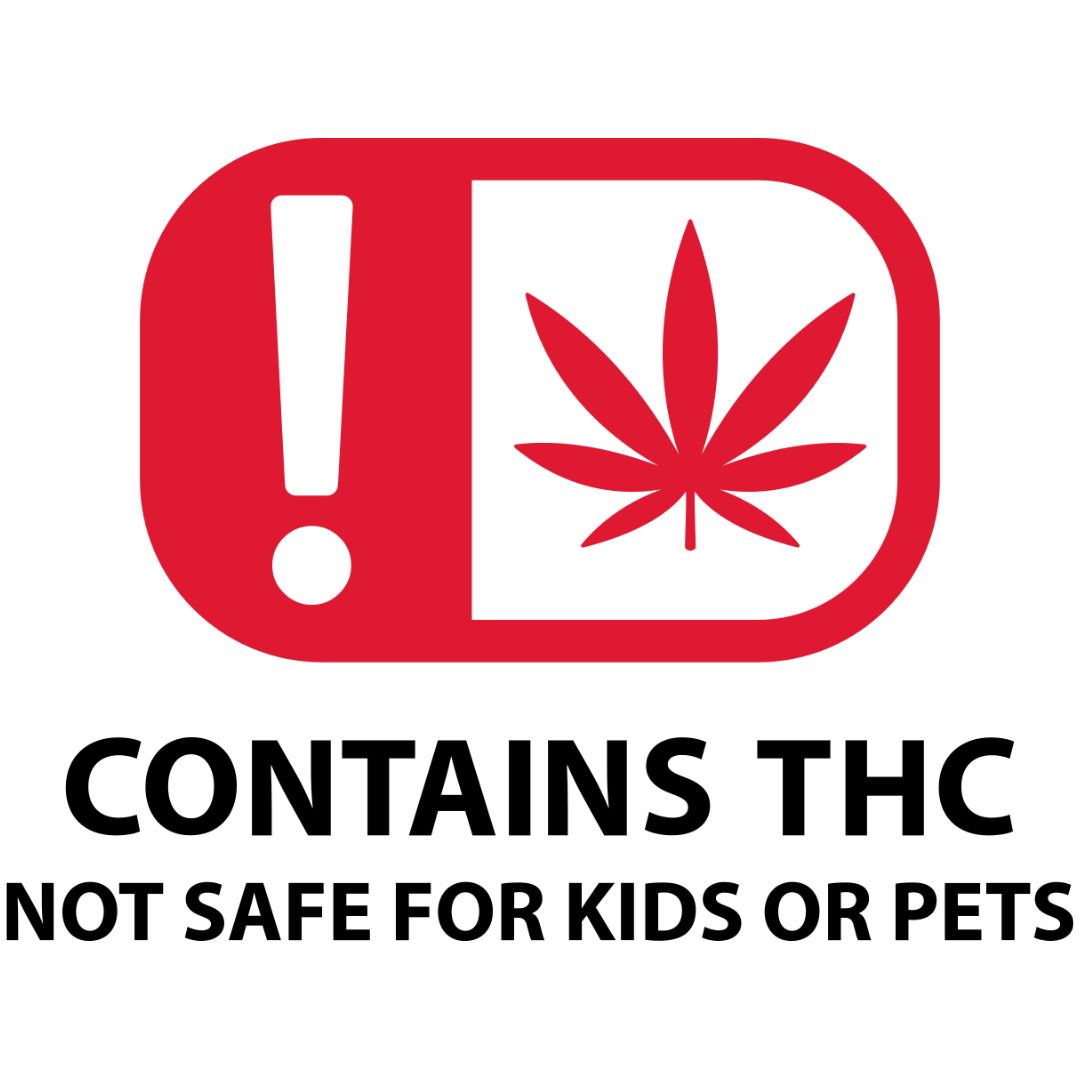
    Oregon mandates the use of a standardized warning symbol on all cannabis packaging. This symbol serves as a quick and clear visual indicator that the product contains THC and should be used with caution.

    Oregon Cannabis Warning Sign

    Key Features and Requirements:

    • Size – The symbol must be at least 0.48 inches wide and 0.35 inches high.
    • Color – The symbol must be in a contrasting color to ensure visibility against the packaging background.
    • Placement – The symbol must be placed on the principal display panel of the package.

    THC and CBD Content Labeling Laws

    Cannabis packaging must accurately reflect the cannabinoid content per Oregon law. THC and CBD content labeling laws in Oregon require that labels display:

    • Total THC (tetrahydrocannabinol) and CBD (cannabidiol) content to be listed both per package and per serving.
    • A variance of no more than 10% from the tested potency levels to ensure accuracy.
    • Information about batch identification and testing to confirm that the product has been tested for cannabinoid content.

    These labeling rules help consumers make informed choices and ensure cannabis products meet state regulations.

    Who Needs Pre-Approval for Cannabis Packaging and Labeling?

    If you’re packaging hemp or marijuana products for individual sale in Oregon—whether for recreational or medical use—pre-approval for packaging and labeling is a must. This applies to anyone who is preparing products intended for consumers, patients, or caregivers at dispensaries or retail shops.

    Recreational Marijuana Businesses

    Pre-approval is required for all licensed producers, processors, wholesalers, retailers, and laboratories that package marijuana products for retail sale to consumers. However, this requirement does not extend to bulk product transfers between licensees; such transfers follow different rules and do not need package or label approval.

    Medical Marijuana Providers

    Medical cannabis growers, processors, and dispensaries registered with the state must also obtain packaging and labeling approval before selling or distributing products to patients or designated caregivers. The key point: the pre-approval rule applies only to products sold to end consumers, patients, or caregivers—not to bulk transfers or items given directly by a grower to their designated patient or caregiver.

    When Is Pre-Approval Not Needed?

    Pre-approval is not necessary for internal transfers between licensed businesses or for growers providing product directly to the patient who designated them—or to that patient’s primary caregiver. As a rule of thumb, if the packaging is intended for consumer-facing sales, pre-approval is required. For behind-the-scenes transfers, different compliance rules apply.

    With this in mind, businesses should plan ahead, as obtaining approval can take several weeks and is mandatory before any product reaches the consumer’s hands.

    What Does a Packaging Application Include?

    When it comes to submitting a packaging application in Oregon, it’s important to understand exactly what falls under “packaging” and what is considered part of the label.

    • Packaging applications pertain only to the physical container that holds the cannabis product—whether that’s a jar, bottle, pouch, or any outer box designed to enclose the product.

    However, anything printed directly onto the packaging—such as text, brand logos, graphics, or imagery—is officially classified as part of the label. These components must be submitted separately as part of the labeling application process, ensuring a clear distinction between what’s being reviewed for packaging compliance and what will be assessed for labeling requirements.

    This separation helps streamline the approval process and ensures every element meets Oregon’s comprehensive regulations.

    The Oregon Cannabis Packaging Pre-Approval Process

    Before a cannabis product can be sold in the Beaver State, businesses must go through the Oregon cannabis packaging pre-approval process. This process includes:

    • Submitting packaging and labels to the Oregon Liquor and Cannabis Commission (OLCC) for official review.
    • Verifying compliance with child-resistant laws and required labeling standards, including ingredients list, health warnings, and THC/CBD content.
    • Receiving OLCC approval or making necessary revisions if packaging does not meet state requirements.

    This step is crucial for avoiding penalties, ensuring customer safety, and maintaining a transparent cannabis marketplace. By securing pre-approval, businesses can confidently bring compliant products to the market.

    How to Apply for Package and Label Approval

    To ensure your product reaches dispensary shelves without delay, it’s important to start the package and label approval process early. Here’s what Oregon cannabis businesses can expect:

    • Begin the application process well before your planned launch date, as reviews can take several weeks.

    Staying Up to Date with Regulatory Changes

    Submitting Variations in Packaging and Labeling

    If you’re releasing a product in multiple variations—say, different flavors, colors, or sizes—you don’t need to submit each version separately for approval. As long as the product and labels are otherwise identical, you can include all variations within the same application. This means a single application fee will cover all those flavors and sizes, making the process more efficient for businesses rolling out diverse product lines.

    Refund Policy for Application Fees

    It’s important to note that the application fee for packaging and labeling approval is non-refundable, even if an applicant chooses not to move forward with their submission. This means that once the fee is paid, it cannot be returned—regardless of changes in business plans or a decision to withdraw the application.

    Understanding this upfront helps businesses plan accordingly and avoid surprises during the compliance process.

    Oregon’s cannabis packaging and labeling laws can change as regulations evolve. To stay compliant, businesses should:

    • Regularly review OLCC updates to stay informed about new requirements and rule changes.
    • Attend industry training sessions to gain insight on best practices and compliance strategies.
    • Consult compliance experts to ensure packaging and labeling meet the latest state guidelines.

    By staying proactive, cannabis businesses can avoid compliance issues, reduce the risk of penalties, and continue operating smoothly within Oregon’s regulated market.

    Final Word

    Compliance with Oregon cannabis packaging regulations is essential for legal cannabis businesses. It ensures that companies can avoid penalties and protect customers.

    Not sure where to begin? Need packaging that meets the pre-approval process? Custom 420 Supply is here to help!

    Our team stays up-to-date on all of Oregon’s laws and regulations, ensuring the packaging we provide meets state compliance. If you’d like to learn more, we invite you to reach out through our contact page.

    Frequently Asked Questions

    What information is mandatory on cannabis product labels in Oregon?

    Oregon labels must show product identity, net weight, a full ingredient list, allergen warnings, and health and usage warnings. They must also display THC and CBD content, the Oregon universal symbol, producer information, and a unique identification code.

    Are there specific requirements for child-resistant packaging in Oregon?

    Yes, all cannabis products must use child-resistant packaging that’s certified by a third-party testing firm. If the product packaging is not compliant, retailers must offer exit packaging that meets these standards.

    What is the universal symbol requirement for cannabis packaging in Oregon?

    Oregon mandates that all cannabis labels include a standardized universal symbol to show the presence of THC. This symbol must meet specific size (0.48 inches wide by 0.35 inches high), color (to ensure visibility), and placement guidelines on the principal display panel.
    Understanding Washington State Cannabis Packaging Laws: Key Requirements for Compliance

    Understanding Washington State Cannabis Packaging Laws: Key Requirements for Compliance

    In the Evergreen State, the cannabis industry is strictly regulated. One of the most important aspects for producers, processors, and retailers to understand is Washington State cannabis packaging laws.

    These laws protect consumers, ensure product safety, and prevent unauthorized access, especially by children. Non-compliance can lead to significant penalties, so industry players must stay updated on these requirements.

    Unsure of where to begin? Our article covers everything you need to know about this state’s cannabis packaging laws.

    General Packaging Requirements

    The Washington State cannabis packaging laws place a strong emphasis on safety, particularly to prevent children from accessing cannabis products. Below are some key packaging standards that cannabis businesses must follow:

    Child-Resistant Packaging

    A key aspect of child-resistant packaging for marijuana products in Washington is that all cannabis products must be in containers resistant to opening by children under 5 years old.

    Packaging must meet the standards set by the federal Poison Prevention Packaging Act. This ensures that the packaging effectively prevents children from accessing harmful products.

    Products not in child-resistant packaging are considered non-compliant and cannot be sold. Retailers and manufacturers must verify that their packaging meets these standards before products can be made available to consumers.

    Tamper-Evident Features

    Packaging must also include tamper-evident features that allow consumers to easily detect if a product has alterations. These features help maintain integrity and safety by ensuring that products remain secure until they reach the consumer.

    Tamper-evident packaging provides an added layer of protection, giving consumers confidence that the product has not been opened or modified before purchase. These features are essential for preventing tampering and ensuring compliance with safety standards.

    Opacity and Resealability

    In addition to being child-resistant and tamper-evident, cannabis packaging must also be opaque, meaning that the contents are not visible to the public. This helps prevent accidental consumption and keeps the product out of sight, reducing the temptation for children and others who may not understand its contents.

    Furthermore, packaging must be resealable, allowing consumers to store products safely after opening. This feature helps maintain product freshness and ensures that the product remains securely contained, even after multiple uses.

    Product Protection

    Cannabis packaging must protect the product from contamination or degradation. This includes using materials that do not release harmful substances into the cannabis or its derivatives.

    Packaging should be made from materials that preserve the product’s quality and prevent exposure to moisture, air, or light. These elements can all have a negative effect on the potency and safety of a cannabis product.

    Specific Product Packaging Standards

    Each type of product has its own unique requirements under Washington State cannabis packaging laws:

    Usable Cannabis (Flower)

    For cannabis flower, packaging must be child-resistant and also comply with the Washington cannabis product warning label standards. This includes providing clear and concise information about the product’s:

    • Potency
    • Weight
    • Origin

    These labeling standards ensure that consumers have all the necessary information to make informed purchasing decisions. Proper packaging also ensures that the flower remains safe and secure from contamination.

    Cannabis Concentrates

    Concentrates (i.e. oils or waxes) also need to be packaged in child-resistant containers. Packaging for concentrates must protect the product from heat, moisture, or other environmental factors that could degrade its quality. Furthermore, to maintain the product’s integrity, packaging must ensure the concentrate is safe and secure until it reaches the consumer.

    Edibles

    Packaging for cannabis-infused edibles must be child-resistant and clearly labeled with information about tetrahydrocannabinol (THC) and cannabidiol (CBD). THC and CBD content labeling laws in Washington State require precise measurement of active ingredients in each serving of the product.

    This ensures accurate information is provided to consumers, helping them make informed decisions about the potency and effects of the product.

    Topicals and Other Products

    For cannabis topicals and other non-consumable products, similar packaging standards apply. While these products may not require detailed dosage information, they must still be packaged in child-resistant containers and include appropriate labeling to comply with Washington State cannabis labeling requirements.

    Labeling Requirements

    Washington State cannabis packaging laws include strict guidelines for labeling cannabis products. These rules ensure consumers have accurate and transparent information about what they are purchasing and consuming.

    Mandatory Information

    Every cannabis product label in Washington must contain the following specific details:

    • Producer and Processor Details – The name and contact information of the licensed producer and processor.
    • Lot Numbers and Production Dates – Unique identifiers to track the product from production to sale.
    • Net Weight and Potency Levels of THC and CBD – Accurate measurements to inform consumers of cannabinoid content.
    • Health and Safety Warnings – Clear warnings about the product’s effects and potential risks.
    • Universal Symbol Requirements for Cannabis Packaging – Each label must display the standardized cannabis symbol, indicating that the product contains cannabis.

    Prohibited Labeling Practices

    There are strict rules about what can and cannot appear on cannabis product labels. Prohibited imagery on Washington marijuana packaging includes cartoons, characters, or any elements that might appeal to children.

    Labels must also avoid making health or medical claims about the product’s efficacy or safety. This prevents misleading consumers and ensures compliance with state regulations.

    Compliance Deadlines and Enforcement

    Businesses in Washington State must adhere to strict timelines for complying with new packaging and labeling regulations. The Washington State Liquor and Cannabis Board (WSLCB) sets these deadlines, and failure to meet them can result in significant fines or the removal of non-compliant products from store shelves.

    The WSLCB actively monitors compliance through inspections and enforcement actions. Businesses should stay updated on regulatory changes and take proactive steps to ensure all packaging and labeling meet current standards. Regular audits and quality control checks can help companies avoid costly penalties and maintain good standing with the industry.

    Best Practices for Producers and Retailers

    To remain compliant with Washington State cannabis packaging laws, producers and retailers should follow these key practices:

    • Use child-resistant packaging to ensure all packaging meets state and federal standards to prevent unauthorized access.
    • Maintain accurate and compliant labeling with clear and accurate labels that meet all the requirements, including potency levels, warnings, and universal symbols.
    • Stay informed on regulation updates by monitoring them on the official WSLCB website.
    • Train employees on compliance to recognize compliant packaging and labeling, and implement systems for regular internal audits to ensure continued adherence to state laws.

    Final Word

    The Washington State cannabis packaging laws are crucial to ensure that cannabis products are safe, accurately labeled, and responsibly sold. By adhering to the state’s regulations on packaging, labeling, and product production, businesses can avoid penalties and contribute to a safe and well-regulated cannabis market.

    Are you a business owner in Washington and unsure where to begin? Custom 420 Supply is here to help. Our team ensures we stay up-to-date on all laws in Washington, only providing you with compliant packaging and labels.

    Want to get started? We invite you to reach out through our contact page today!

    Frequently Asked Questions

    What information is mandatory on cannabis product labels in Washington State?

    Cannabis product labels in Washington State must include the following mandatory information:

    • The name and contact information of the producer and processor
    • The product’s net weight and potency levels for THC and CBD
    • Lot numbers and production dates
    • Health and safety warnings
    • The universal cannabis symbol
    Are there specific font size requirements for cannabis packaging labels in Washington State?

    Yes, Washington State requires specific font size and legibility standards for cannabis product labels. The text must be large enough to ensure readability and must be placed in a way that makes all required information clear and visible.

    What are the child-resistant packaging standards for cannabis products in Washington State?

    Cannabis products in Washington State must be packaged in child-resistant containers that meet the standards set by the federal Poison Prevention Packaging Act. The packaging must be difficult for children under the age of 5 to open while remaining accessible to adults.

    Colorado Marijuana Packaging Requirements: A Complete Guide

    Colorado Marijuana Packaging Requirements: A Complete Guide

    If you run a cannabis business in the Centennial State, understanding Colorado marijuana packaging requirements is essential. The state has strict regulations to ensure consumer safety, product transparency, and legal compliance. This guide breaks down the key requirements so your business can stay on the right side of the law.

    These packaging regulations serve several important purposes:

    • Brand and Product Recognition – Clear labeling helps consumers identify trusted brands and differentiate between products.
    • Consumer Awareness – Packaging must provide essential details, including potency, ingredients, and usage warnings, so buyers can make informed choices.
    • Legal Compliance and Safety – Strict guidelines prevent underage access, reduce health risks, and align with state laws to keep businesses legally protected.

    As one of the most developed cannabis markets in the U.S., Colorado enforces detailed packaging requirements. Whether you’re launching a new product or updating existing packaging, following these rules is critical to maintaining compliance. Below, we outline everything you need to know to keep your business in line with state regulations.

    General Packaging Requirements in Colorado

    The Colorado Marijuana Enforcement Division (MED) requires comprehensive packaging standards to ensure safety and compliance with state laws. These rules are specifically designed to prevent accidental ingestion, particularly by children, and to maintain the integrity of cannabis products. Such requirements include the following:

    Child-Resistant Cannabis Packaging

    All cannabis products must be sold in child-resistant packaging that meets the guidelines set by the Consumer Product Safety Commission (CPSC). This ensures that the packaging is secure and minimizes the risk of children accessing it. The packaging must be tested and proven effective at preventing children under five years old from opening it.

    Opaque and Tamper-Evident Packaging

    Cannabis packaging must be non-transparent, meaning it should not allow the product inside to be visible. This helps reduce the risk of appealing to children and helps maintain privacy for consumers.

    Furthermore, all packaging must include tamper-evident features, such as seals or breakable closures. This indicates whether it’s been opened or altered, ensuring the consumer receives a safe, untainted product.

    Resealable Containers

    Multi-use cannabis products (i.e. edibles or concentrates) must be sold in resealable packaging. This feature helps preserve the freshness of the product, preventing contamination or degradation over time. It also minimizes the chances of accidental consumption by allowing consumers to securely close the packaging after each use.

    Colorado THC Warning Label Requirements

    Proper labeling is crucial for both consumer awareness and legal compliance. Every marijuana product in Colorado must have a clearly visible THC warning label that includes the following essential information:

    • THC Content Statement – The label must clearly state that the product contains THC, ensuring consumers are fully informed about the presence of the psychoactive compound.
    • Health Risk Warning – A warning must be included regarding potential health risks, such as the dangers of using cannabis during pregnancy or while operating machinery. This helps consumers make informed choices about when and how to use the product safely.
    • Age Restriction Notice – The label must indicate that the product is intended for individuals 21 years of age or older, in line with Colorado’s legal age requirement for marijuana use.
    • FDA Disclaimer – A disclaimer must be included stating that cannabis products are not approved by the Food and Drug Administration (FDA), making it clear that these products are not intended to diagnose, treat, cure, or prevent any diseases.

    These labeling requirements are in place to protect consumers and ensure transparency. They help individuals make safe, informed decisions while staying within the bounds of the law.

    Challenges and Insights from Consumers

    While these requirements are comprehensive, feedback from consumers and research groups in states like Colorado and Washington has highlighted several potential areas for improvement:

    • Information Overload: Many users report that marijuana product labels can be dense with information and warnings, making them overwhelming or difficult to fully process. Simplifying messaging and reducing the number of competing warnings could help ensure important details stand out.
    • Clearer Consumption Guidance: New and visiting consumers often find dosage and consumption recommendations unclear, increasing the potential for accidental overconsumption—especially with edibles, where effects may be delayed. Labels that offer straightforward advice, possibly supplemented by a web address for additional guidance, can help bridge this gap.
    • Universal Symbols and Graphics: The addition of a universal THC symbol has been a step forward, but users note that consistent, easy-to-recognize graphics (rather than just text) help both regular consumers and non-users quickly identify products containing cannabis.
    • Voluntary vs. Required Information: In some cases, voluntary information—like detailed consumption tips or nutritional facts—has been found more helpful than the state-mandated content. Many consumers believe nutritional labeling should be standard, and greater transparency about product ingredients or processing methods (such as the use of certain extraction materials) would be beneficial.
    • Education for New Users: Given Colorado’s draw as a tourist destination, participants in consumer research emphasize the importance of educational resources, particularly for first-time users. Including a website link or reference to a neutral source for further information can help ensure safe, informed consumption and support responsible tourism.

    By staying attentive to both the letter of the law and the real-world needs of consumers, cannabis businesses can play a key role in supporting public health, safety, and a positive reputation for Colorado’s legal marijuana market.

    The Importance of Clear Education and Accessible Information

    Beyond packaging and warning labels, providing easy-to-understand educational resources plays a vital role in public safety—especially with marijuana edibles. Many consumers, particularly newcomers and tourists, may be unfamiliar with the delayed onset and potency of edibles compared to other cannabis products. This can lead to unintentional overconsumption or misuse, resulting in negative experiences and potential health risks.

    To address this, seasoned users have voiced a strong need for packaging to include educational materials or direct links to trusted, unbiased online resources. By making reliable information readily available, manufacturers and regulators can help demystify dosage, highlight safe consumption practices, and clarify the effects and duration of edibles. Not only does this empower consumers to make informed decisions, but it also helps prevent accidents or incidents that could jeopardize the future of legal, recreational cannabis sales in Colorado.

    A well-informed public is less likely to misuse these products, safeguarding both individual well-being and the broader cannabis industry’s reputation.

    Why Edibles Affect the Body Differently

    Edibles deliver a distinct experience compared to smoking or vaping cannabis, largely due to the way THC is processed by the body. When cannabis is eaten, the THC is metabolized by the liver before entering the bloodstream. This process—known as first-pass metabolism—converts THC into a more potent compound (11-hydroxy-THC), which can amplify the psychoactive effects. As a result, the onset of the high is often delayed, sometimes by two hours or more, but once it arrives, it can be noticeably stronger and last much longer than inhaled cannabis.

    Understanding this difference is key for both new and experienced consumers. It’s easy to accidentally take too much when the effects aren’t immediate, leading to a more intense or prolonged experience than intended. For this reason, clear labeling and careful dosing instructions are especially important with edible products.

    Colorado Marijuana Universal Symbol Guidelines

    Since January 1st, 2020, Colorado has mandated that all cannabis product packaging display a universal symbol for THC recognition. This symbol ensures that consumers can easily identify products containing THC, promoting safety and awareness.

    This requirement was developed in response to research highlighting the need for a clear, unmistakable symbol to indicate when edibles and other products contain marijuana. To address this, Colorado updated its universal symbol from the previous regulatory seal to a more visible and intuitive design—one that now features an exclamation mark and the letters “THC.” This shift reflects the state’s commitment to consumer protection and clarity, especially as the market for edibles and infused products continues to grow.

    The key elements of this requirement include the following:

    Florida Universal Cannabis Warning Symbol
    • Red Diamond with “THC” – The symbol of the red diamond with the letters “THC” clearly displayed inside, making it easy for consumers to recognize at a glance that the product is psychoactive.
    • Size Specifications – The universal symbol must be at least 6mm by 6mm in size to ensure visibility and clarity.
    • Applies to All Cannabis-Infused Packaging – This symbol requirement applies to all cannabis-infused products, including edibles, concentrates, and topicals. It helps to ensure consistent identification across a wide range of cannabis products.

    This symbol helps protect consumers by clearly signaling the presence of THC. It ensures that the product is easily identifiable and that users are fully aware of what they’re purchasing.

    Cannabis Product Labeling Compliance in Colorado

    To ensure compliance with Colorado’s cannabis product labeling regulations, all cannabis product packages must include the following information:

    • License Numbers – The license number of both the cultivation facility and the retail outlet where the product was sold must be clearly stated. This confirms that the product has been legally produced and distributed.
    • Harvest Batch Number and Net Weight – Each product must include the harvest batch number, which allows for traceability, and the net weight of the product to provide consumers with accurate details about the amount they’re purchasing.
    • Ingredient List – A complete list of ingredients must be included, including any potential allergens. This helps consumers make informed choices, especially those with allergies or dietary restrictions.
    • THC and CBD Content – The total tetrahydrocannabinol (THC) and cannabidiol (CBD) content must be listed in milligrams, both per serving and per package. This ensures that consumers know exactly how much of each compound they’re consuming.
    • Storage Instructions and Expiration Dates – For perishable products, clear storage instructions and an expiration or “use-by” date must be included. This helps maintain product quality and ensures the product is consumed within its safe and effective timeframe.

    What Cannabis Consumers Value Most on Labels

    Consumer feedback sheds further light on which labeling elements are particularly important when choosing cannabis products—especially edibles. Across user groups, there’s a clear preference for labels that strike a balance between essential information and ease of understanding. Here’s what stands out:

    • Ingredient and Allergen Listings Shoppers consistently cite ingredient lists as a must-have, especially for those with food allergies or dietary restrictions. Clear allergen disclosures give buyers peace of mind and help them avoid adverse reactions.
    • Nutritional Information Many consumers believe that nutritional content—calories, sugars, and fats—should always be listed, not just provided voluntarily. This is particularly valued on edibles, as people want to make informed choices that align with their dietary needs or health goals.
    • Simple, Visual Warnings Overly dense labels can be overwhelming, so consumers value warnings that are straightforward and enhanced by graphic elements. Easy-to-recognize icons, like the universal THC symbol, help both new and experienced users quickly identify psychoactive products and avoid accidental consumption.
    • Clear THC and CBD Content The specifics matter: buyers want to know exactly how much THC and CBD they’re getting per serving and per package. This is especially important for newcomers or visitors, who may be unfamiliar with varying potencies and delayed effects.
    • Usage and Storage Instructions Concise directions for safe consumption—including recommendations for first-time users—and clear storage advice increase confidence and satisfaction with the product.

    Ultimately, consumers want cannabis product labels that are both informative and user-friendly—conveying critical safety and ingredient details without bombarding them with unnecessary or confusing text. When labels are clear, concise, and helpful, shoppers can navigate products safely and with greater assurance.

    Consumer Concerns About Unexpected Ingredients in Marijuana Edibles

    Many consumers have voiced concerns about unexpected ingredients or chemicals in marijuana edibles, particularly when it comes to the use of solvents like butane during production. There is growing demand for transparency, with individuals emphasizing the importance of clear labeling on not just cannabinoids, but also additives and processing chemicals that may be present in the final product.

    Some consumers are surprised to discover that certain methods, such as butane extraction, are commonly used and may leave trace amounts in the end product. This calls attention to the need for comprehensive ingredient disclosure. Many believe nutritional and ingredient information should be mandatory rather than optional, to allow everyone—especially those with allergies or sensitivities—to make truly informed choices.

    By ensuring complete transparency about all ingredients, including any chemicals or unexpected components, regulators and manufacturers can help build consumer trust and support public health and safety.

    Voluntary vs. State-Mandated Label Information

    Many consumers actually prefer when manufacturers go above and beyond state requirements by including additional, voluntary details on product packaging. While Colorado’s regulations ensure essential information is included—like THC content, batch numbers, and health warnings—some companies choose to provide extra specifics, such as ideal dosage suggestions, recommended use cases, or more detailed ingredient sourcing.

    Why do consumers appreciate this? Voluntary information often addresses the real-world questions and concerns that shoppers have, helping them make more confident (and sometimes smarter) choices. Whether it’s advice about how to start slow with a particular edible or notes about where the cannabis was grown, these manufacturer-added details can feel more practical and directly relevant than generic regulatory text. In short, while state-mandated labels are critical for safety and transparency, a little extra insight from the producer is often welcomed by those looking to tailor their cannabis experience.

    Challenges Consumers Face with Current Marijuana Edible Labels

    Despite the array of required information on marijuana edible packaging, many consumers still encounter confusion when trying to understand what’s inside—or how to use it safely. Several factors contribute to this problem:

    • Information Overload – Current labels often feature a mix of numerous warnings, disclaimers, and ingredient listings packed into a small space. This can make it hard for consumers to quickly spot the most important details, potentially leading to missed warnings or overlooked dosage instructions.
    • Complex Messaging – The sheer number of required statements, each with its own formatting and legal language, creates a cluttered appearance. Rather than clearly directing attention to the most crucial safety points, consumers may end up skimming or ignoring the label altogether.
    • Lack of Clear Graphics – Effective health communication relies not just on words, but also on visual aids—simple icons, bold highlighting, or universal symbols like the red THC diamond. When labels fail to emphasize graphics or use visuals strategically, it’s easier for key messages to get lost in the shuffle.
    • Difficulty for New Users – Those who are trying cannabis edibles for the first time, or individuals unfamiliar with specific product terminology, often struggle to interpret cannabinoid content, serving sizes, and recommended usage. Technical jargon and densely packed text can make the experience feel inaccessible.

    Overall, while the intent behind comprehensive labeling is to safeguard consumers, too much information delivered without simplicity can end up doing the opposite—leaving people unsure, confused, or unaware of the most important safety guidance.

    Colorado Cannabis Packaging Font Size Standards

    Colorado regulations also specify minimum font size requirements for cannabis product labels to ensure readability:

    • Warning statements must be in an 8-point font.
    • The universal THC symbol must be clearly distinguishable from other elements.
    • Product names and descriptions should be printed in a way that does not mislead consumers.

    Prohibited Terms on Colorado Marijuana Packaging

    Colorado enforces strict rules on what can and cannot appear on marijuana product packaging to prevent misleading claims and protect consumers. The following terms and imagery are strictly prohibited:

    • Appealing to Minors – Packaging cannot include any references or imagery that may appeal to children (i.e. cartoons, toys, or child-friendly designs). This rule ensures that cannabis products are marketed appropriately for adults and do not attract underage consumers.
    • False or Misleading Health Claims – Packaging must not make unverified or misleading health claims, such as “cures cancer” or “safe for all ages.” These types of statements can mislead consumers and promote unsafe use.
    • Exaggerated Potency Claims – Terms like “high potency” or “best on the market” are not allowed. These claims suggest the product is superior in potency or quality without supporting evidence, potentially misleading consumers.

    These regulations help maintain the integrity of cannabis marketing in Colorado, ensuring that products are advertised honestly and safely.

    Recommendations from Consumers and Non-Users for Improving Edible Labels

    Through recent focus group discussions with both experienced users and nonusers in cities like Denver and Seattle, several valuable suggestions emerged to make edible labeling safer and easier to understand:

    • Streamline and Simplify Information: Many participants felt edible labels are currently packed with too much information—multiple warnings, dense details, and confusing layouts—which can overwhelm customers and lead them to skip reading important content altogether. There was a call for more concise wording, fewer separate warnings, and a clearer hierarchy of information.
    • Adopt Clear Symbols and Graphics: A widely-supported improvement was the use of an easily recognizable symbol—such as the updated Colorado universal THC emblem—to instantly signal that a product contains marijuana. Graphics and icons were preferred over long text descriptions, especially for communicating basic warnings.
    • Make Dosage and Effects Obvious: Participants highlighted the need for consumption recommendations to be more prominent and clear, especially for first-time users or out-of-state visitors unfamiliar with delayed effects from edibles. Simple instructions and dosage guides could help prevent accidental overconsumption.
    • Mandate Nutritional and Ingredient Information: There was strong support for requiring, not just encouraging, full nutritional breakdowns and comprehensive ingredient lists. Many were surprised by the presence of certain additives or preparation methods—transparency here was seen as crucial.
    • Include Educational Resources: Another popular suggestion was to provide a website or digital resource from a neutral authority (such as NORML or Leafly) on product packaging. This would enable customers to access unbiased information about what they’re consuming and what effects they might expect.
    • Focus on Public and Visitor Safety: Participants expressed concern that tourists or inexperienced consumers might not understand edible effects and dosing, potentially risking their safety and the broader reputation of legal cannabis. By improving labeling clarity, states can help prevent avoidable negative experiences and support responsible legalization.

    In summary, simplifying edible labels, prioritizing important warnings with clear graphics, ensuring transparency, and connecting consumers to educational resources would help both new and seasoned users make safer, more informed decisions.

    Prohibited Terms on Colorado Marijuana Packaging

    Recent Updates and Compliance Considerations

    • Use-By Dates – As of January 2024, all cannabis products must include a “use-by” date and recommended storage conditions.
    • Edible Serving Sizes – Since July 2019, marijuana edibles must be pre-portioned into servings of no more than 10mg THC, with each serving individually marked or wrapped.
    • Exit Packaging – All dispensaries must place purchased cannabis products in opaque, child-resistant exit bags before customers leave the store.

    Improving Edible Marijuana Labeling: Insights from Real Users

    Recent consumer research and focus group discussions in cities like Denver and Seattle have shed light on where edible cannabis labeling can be made more effective for both seasoned users and newcomers.

    Prioritize Clarity and Simplicity on Labels

    Participants generally found current label designs too crowded with technical jargon and overly complex warnings. This information overload can cause consumers to tune out important safety messages altogether. To counter this, states should streamline cannabis edible labels by:

    • Focusing on a handful of essential safety and dosing messages.
    • Using simple, direct language.
    • Incorporating clear graphics or icons where possible.

    Adopt Universal Symbols and Standardized Warnings

    One practical recommendation is to use an easily recognizable universal symbol—like Colorado’s current “THC!” icon—which clearly indicates that a product contains marijuana. This helps prevent accidental consumption, particularly among nonusers and visitors.

    Provide Clear Dosing and Use Instructions

    First-time purchasers and tourists are especially vulnerable to confusion about edible effects and dosing. Improved labels should offer straightforward consumption guidance, highlight the potential for delayed effects, and explicitly warn about overconsumption.

    Enhance Nutritional and Ingredient Transparency

    Many users expressed a desire for full nutritional details and comprehensive ingredient lists, including any solvents or processing chemicals used (e.g., butane). Making this information mandatory, rather than optional, builds trust and allows consumers to make informed choices—mirroring what you’d expect on any packaged food.

    Link to Educational Resources

    Labels could also include a web address for a reputable, unbiased resource. This empowers consumers to learn more about safe use, product effects, and cannabis regulations before trying edibles—closing the knowledge gap for new or out-of-state users.

    By focusing on these improvements, states can create more effective edible labeling that better serves both public health and consumer preferences—ultimately supporting the responsible rollout of cannabis policies.

    Ongoing Research on Consumer Reactions to Edible Labeling

    Industry experts and academic researchers are actively studying how consumers interpret and respond to cannabis edible labeling. This ongoing research includes:

    • User Surveys – Gathering feedback from adult consumers to understand how they perceive current edible labels and whether key information (such as THC content and serving sizes) is clear and accessible.
    • Social Media Analysis – Monitoring platforms like Twitter to identify trends and concerns expressed by cannabis users about labeling, product effects, and purchasing experiences.
    • Budtender Interviews – Speaking directly with dispensary staff to gain insights into the common questions customers ask and the challenges they face when explaining labeling requirements.

    These research efforts aim to guide regulators and businesses in refining packaging and labeling practices, making edible products safer and more transparent for consumers.

    Consumer Perceptions: Do Edible Labels Hit the Mark?

    But how do real consumers feel about the effectiveness and clarity of edible marijuana packaging and labeling? In focus groups conducted with both regular users and those new to cannabis in Denver and Seattle, several common themes emerged.

    Participants admitted that many edible labels come across as cluttered and overwhelming—there’s simply too much information crammed into a small space. This information overload can make it harder for consumers to sort out the most critical details, such as dosage, warnings, and safe storage. As a result, people may just tune out and skip reading the labels altogether.

    Another takeaway: Participants believed that edible packaging often buries important safety messages beneath a jumble of warnings and regulatory language. They recommended clearer, more straightforward messaging that focuses on key takeaways. Simple graphics or visual cues—similar to those found on over-the-counter medicines or popular food brands—could help break up text-heavy labels and make essential details stand out.

    Ultimately, the feedback from these groups highlighted the need for cannabis packaging and labels that prioritize clarity, minimize information overload, and make crucial health and safety tips easy to spot. This not only helps protect consumers, but also supports compliance and transparency within Colorado’s evolving cannabis industry.

    It’s important to keep in mind that consuming edibles—rather than smoking or vaping—often leads to longer-lasting and sometimes more intense effects. Because the intoxicating effects of edibles can be delayed by two hours or more, it’s easy to inadvertently eat too much if you’re not careful. Some products may contain multiple servings within a single package, so always check the label to be sure you’re aware of the total THC content. A clear label helps prevent accidental overconsumption and ensures you’re prepared for the experience.

    Final Word

    Colorado’s cannabis packaging laws are strictly enforced to promote consumer safety and regulatory integrity. Dispensaries and manufacturers must stay updated with any changes to avoid legal penalties and ensure responsible marketing.

    By following these Colorado marijuana packaging requirements, businesses can maintain compliance, protect consumers, and contribute to the responsible growth of the cannabis industry. Not sure where to begin? That’s where Custom 420 Supply comes in.

    Our team ensures that you receive packaging 100% compliant with Colorado’s guidelines. If you want to learn more, we invite you to reach out through our contact page.

    Frequently Asked Questions

    What are the mandatory labeling requirements for cannabis products in Colorado?

    Cannabis products in Colorado must include the license numbers of the cultivation and retail facilities, the harvest batch number, ingredient list, THC and CBD content, and storage instructions, along with expiration dates for perishable products.

    Are there specific font size requirements for cannabis packaging labels in Colorado?

    Yes, Colorado requires that certain labeling information, including the THC content and health warnings, be displayed in a font size that ensures readability, but specific font sizes may vary depending on the label’s size and space.

    What are the child-resistant packaging standard for cannabis products in Colorado?

    All cannabis products must be sold in child-resistant packaging that meets the standards set by the Consumer Product Safety Commission (CPSC) to prevent children under five from opening that container.

    Oklahoma Cannabis Packaging Regulations and Label Laws

    Oklahoma Cannabis Packaging Regulations and Label Laws

    If you live in the Sooner State, your medical cannabis business always needs to stay updated when it comes to laws. Luckily, our guide details Oklahoma cannabis packaging regulations.

    These guidelines are put into place so customers can:

    • Identify with a brand.
    • Understand essential information found within a product.
    • Determine whether or not they want the product.

    Since Oklahoma is one of the largest medical industries in the state, it’s important to know the rules and regulations. We’ve laid them out to ensure your business meets these guidelines.

    Are Your Cannabis Products Packaged According to Regulations?

    Cannabis packaging in Oklahoma is only allowed by a registered dispensary. These businesses must ensure the marijuana is in an envelope or container that says “intended for sale.” On top of that, it must meet other label requirements (see below).

    Since cannabis is still federally illegal, each state has its own guidelines when it comes to cannabis packaging. Oklahoma is no different but still follows some universal trends. These include:

    • The minimum amount or net weight of the package
    • The license, batch, and serial number of the cultivation facility
    • Chemical info (THC, CBD potency)
    • Strain info (Indica, Sativa, or Hybrid)
    • Dates (cultivation, testing, expiry, etc.)
    • Necessary Warnings
    • Child-proof packaging
    • Tamper-proof packaging
    • Re-sealable packaging
    • Mandatory Universal logo/symbol
    • Optional “Not Safe for Kids” logo
    • Dimensions and color of the logo
    • Other additive or contaminants info on the label

    Packaging without these requirements are subject to fines and penalties.

    Oklahoma Cannabis Packaging Laws and Regulations

    Still, specific laws pertain specifically to custom cannabis packaging in Oklahoma. Most notably, cannabis is only medically legal in the state. Therefore, dispensaries are only allowed to distribute to qualifying patients or caregivers.

    On top of that, an Oklahoma cannabis business must abide by the following:

    Universal Symbol

    The icon or logo is the first indicator to identify cannabis packaging. To indicate that a consignment holds marijuana, Oklahoma State’s Cannabis Labeling requirements direct all the sellers to paste universal symbols to label the packages or containers.

    Oklahoma Cannabis Packaging Warning Label

    In Oklahoma, all packages and individually packaged product units, including but not limited to those from bulk packaging, must contain the Oklahoma Uniform Symbol (or universal symbol) in clear and plain sight.

    The universal symbol must be printed no smaller than ½ inch x ½ inch (recommended .06″ x .085″) in size and be red with black text.

    It’s not acceptable in the Marijuana Legalization Act to use a logo that is recreated, distorted, pixelated, and stretched. To follow full compliance, you are also required not to change the icon color or use it on a dark background.

    Package and Label Laws

    Oklahoma is known as the Wild West of weed. Low license fees, no license caps, inexpensive labor, and land costs make it easier for everyone to enter the cannabis industry. After the 2018 Farm Bill, most people in Oklahoma possess a patient card that allows them to purchase cannabis products.

    The cannabis labeling and packaging guidelines in Oklahoma are as follows:

    • The packaging shouldn’t be made to look attractive to minors.
    • The packaging should only depict general information like the company name and product information.
    • False advertising, like medical claims and curative properties, is prohibited.
    • Packages must refrain from infringing or violating any federal trademark regulation or law. 

    The label must contain the following important information:

    • Chemical profile (Terpenoid, THC, CBD potency)
    • Government warning statements for labeling, such as:
      • This product has been tested for contaminants.
      • Keep out of reach of children.
      • Women should not use marijuana or medical marijuana products during pregnancy because of the risk of birth defects.

    Child Resistant Packaging Guidelines

    • The design should be difficult for children under five to open.
    • It should be easy for normal adults to use.
    • Keep the packaging opaque so the product can’t be seen without opening the package.
    • Make it re-sealable to make the packages child-resistant and ideal for multiple openings if they contain multiple servings.

    Labeling Essentials

    • Labels, packages, and containers shall not be attractive to minors nor contain any content that reasonably appears to target children, including toys, cartoon characters, and similar images. Packages should be designed to minimize appeal to children and shall not depict images other than the business name logo of the medical marijuana producer and the image of the product.
    • Packages and labels shall not contain any false or misleading statements.
    • No medical marijuana or medical marijuana products shall be intentionally or knowingly packaged or labeled to cause reasonable patient confusion as to whether the medical marijuana or medical marijuana product is a trademarked product.
    • No medical marijuana or medical marijuana products shall be packaged or labeled in a manner that violates any federal trademark law or regulation.
    • Packages and labels shall not make any claims or statements that the medical marijuana or medical marijuana products provide health or physical benefits to the patient.

    Special Recommendations

    • Display information clearly and legibly.
    • Use English and at least 6-point font.
    • Ensure all required labeling is displayed on the outer layer of the packaging.
    • Small packaging that makes it challenging to fit required information on the outer layer may use an information panel to include some of the required information. Examples include: hang tags, peel-back labels, and inserts.

    Final Word

    Need an Oklahoma cannabis packaging distributor? While we aren’t located in the state, our team ensures to design packaging that abides by the above-mentioned laws and regulations.

    In fact, Custom 420 has been partners with the Cowboy Cup (an Oklahoma cannabis competition) for the last four years. This involvement has given us insight into the state’s industry and specific regulations.

    Want to learn more? We invite you to reach out through our contact form.

    California Cannabis Packaging Regulations and Label Laws

    California Cannabis Packaging Regulations and Label Laws

    While medical marijuana in California has been legal for some time, the recreational industry is still up and coming. Therefore, your business needs to be aware of California cannabis packaging regulations.

    These laws are in place for a few specific reasons. They help potential buyers:

    Your inability to follow these laws can also result in various legal consequences. Therefore, we invite you to follow along as we discuss California’s cannabis compliance packaging.

    Why Do You Need to Follow Cannabis Packaging Laws?

    Cannabis packaging laws are essential for buyers to determine if a product is right for them. More specifically, labels often require specific information to provide buyers with knowledge of what’s in a product (i.e. THC count).

    In California, only a dispensary can package and sell marijuana. This product must also be in an envelope or a container that says “intended for sale.” It must also include all the required information (see below).

    Since cannabis is still federally illegal, packaging laws vary from state to state. Still, you need to follow some universal regulations. Below, we’ve laid out both types of laws here to ensure your California cannabis flower packaging is up to code!

    California’s Cannabis Packaging and Label Guidelines

    Laws for cannabis packaging in California are split into the following three articles. These are found in Subchapter 5 by the Office of Manufactured Cannabis Safety (OMCS):

    Article 1. General Provisions

    40400. Applicability.

    The requirements in this section shall apply to finished cannabis products and shall not apply to cannabis or cannabis products that are transferred between licensees for the purpose of further processing or packaging.

    40401. Release to Distributor as Finished Product.

    Before the release of a product to a distributor, a licensee shall ensure that the product is in finished form and labeled/packaged in its final form for sale at a dispensary.

    Article 2. Labeling Requirements §40403. General Provisions.

    (a) Any information required to be listed on a label shall be written in English.

    (b) A label shall be unobstructed and conspicuous.

    (c) All required label information shall be unobstructed and conspicuous.

    40405. Primary Panel Labeling Requirements.

    (a) The label for a cannabis product shall include a primary panel with the following information:

    (1) The identity of the product in a text size reasonably related to the most prominent printed matter on the panel;

    (2) The words “cannabis-infused” immediately above the identity of the product in bold type and a text size larger than the text size used for the identity of the product;

    (3) The cannabis product symbol as prescribed in Section 40412;

    (4) The net weight or volume of the contents of the package;

    (5) The THC content and CBD content for the package in its entirety, expressed in milligrams per package;

    (6) The THC content and CBD content per serving, expressed in milligrams per serving; and

    (7) The content of other cannabinoids or terpenes per serving if such information is verified by the certificate of analysis issued by a licensed testing laboratory under Business and Professions Code section 19344.

    (b) The primary panel text must be in type size no less than 6-point font and be about the size of the primary panel and container.

    California’s Cannabis Packaging and Label Guidelines

    40408. Informational Panel Labeling Requirements.

    (a) The label for a medical cannabis product shall include an informational panel with the following:

    (1) The licensed manufacturer and its contact number or website address;

    (2) The date of manufacture;

    (3) Each of the following statements:

    (A) “SCHEDULE I CONTROLLED SUBSTANCE.”
    (B) “KEEP OUT OF REACH OF CHILDREN AND ANIMALS” in bold print.
    (C) “FOR MEDICAL USE ONLY.”
    (D) “IF PREGNANT OR BREASTFEEDING, CONSULT A PHYSICIAN PRIOR TO USE.”
    (E) “THE INTOXICATING EFFECTS OF THIS PRODUCT MAY BE DELAYED BY UP TO TWO HOURS.”
    (F) “THIS PRODUCT MAY IMPAIR THE ABILITY TO DRIVE OR OPERATE MACHINERY, PLEASE USE EXTREME CAUTION.”

    (4) A list of all product ingredients in descending order of predominance by weight or volume;

    (5) If an edible product contains an ingredient, flavoring, coloring, or an incidental additive that bears or contains a major food allergen, the word “contains,” followed by a list of the applicable major food allergens;

    (6) If an edible product, the names of any artificial food colorings contained in the product;

    (7) If an edible product, the amount, in grams, of sodium, sugar, carbohydrates, and total fat per serving;

    (8) The lot number;

    (9) Instructions for use, such as the method of consumption or application, and any preparation necessary before use;

    (10) The product expiration date, “use by” date, or “best by” date; and also

    (11) The unique identifier.

    (b) The informational panel text shall be in a type size of no less than 6-point font and about the size of the primary panel and container unless there is an insufficient area on the container available to print all the required information in a type size of no less than 6-point font. In such a case, the label shall include the warning statements required by paragraph (3) in a type size of no less than 6-point font, and the product shall be accompanied by supplemental labeling that includes all of the information required by this section. The text of the supplemental labeling shall be no less than 8-point font.

    40410. Labeling Restrictions.

    The label shall not contain any of the following:

    (a) Claims that the manufactured cannabis or cannabis product was grown in a California county when the cannabis was not grown there.

    (b) The name of a California county unless the cannabis was grown there.

    (c) Content that is or designed to be attractive to individuals under the age of 21, including but not limited to:

    (1) Cartoons;
    (2) Any likeness to images, characters, or phrases that are popularly used to advertise to children; or
    (3) Any imitation of candy packaging or labeling.

    (d) False labeling information. Labeling is false if it is false or misleading in any particular.

    (e) Claims of health benefits or other physical benefits.

    40412. Cannabis Product Symbol.

    The primary panel of a medical cannabis product shall be marked, stamped, or otherwise imprinted with the cannabis product symbol directly on the package.

    (a) The symbol shall replicate the following in form and color:

    California Universal Symbol

    (b) The symbol shall be no smaller in size than half (.5) inch by half (.5) inch and shall be printed legibly and conspicuously.

    Article 3. Packaging §40415. Packaging.

    As per law, a package used to contain a cannabis product shall adhere to the following requirements:

    (a) The package shall protect the product from contamination and shall not expose the product to any toxic or harmful substance.

    (b) The package shall be tamper-evident, which means that the product shall be packaged in a container within which a product is sealed so that the contents cannot be opened without obvious destruction of the seal.

    (c) The package shall be child-resistant, which means the package shall be designed or constructed to be significantly difficult for children under five years of age to open or otherwise obtain access to the product contained therein within a reasonable time, and shall not be difficult for normal adults to open or obtain access to the product contained therein. A package shall be deemed child-resistant if it satisfies the standard for “special packaging” as outlined in the Poison Prevention Packaging Act of 1970 Regulations (16 C.F.R. §1700.1(b) (4)).

    (d) The package shall not imitate any package used for products typically marketed to children.

    (e) If an edible product, the package shall be opaque.

    (f) If the package contains more than one serving of cannabis product, the package shall be re-sealable so that child resistance is maintained throughout the life of the package.

    Final Word

    Need help navigating California’s cannabis packaging laws? We’re here to help! At Custom 420, we ensure all our custom packaging is designed to match state laws and regulations.

    Not sure where to begin? We invite you to reach out through our contact form.

    Frequently Asked Questions

    How to package and sell cannabis edibles in California?

    The details of California’s cannabis edibles packaging laws are detailed above. However, this state has some of the most stringent laws for packaging edibles.

    What information must be in cannabis packaging in California?

    The main things you need on a cannabis package are the product, its weight, and the universal symbol for CA-licensed cannabis products. However, as our guide entails, there is more to California’s cannabis packaging laws.

    Alabama Cannabis Packaging Laws and Label Regulations

    Alabama Cannabis Packaging Laws and Label Regulations

    As the cannabis market continues to evolve, so do laws and regulations. As of this time, these products remain one of the strictest regulated. And Alabama cannabis packaging laws are no exception to this strictness.

    Still, the laws are in place for a reason. Imagine walking into a store and finding various brands of the same product. The first thing you’ll do is check the label to ensure you know exactly what you’re purchasing.

    While cannabis remains federally illegal, more and more states are legalizing it. As of this time, Alabama has a medical program that allows the sale of cannabis to qualifying patients. However, these sales must meet the state’s requirements.

    So, what are these requirements? Throughout this article, we’ll take a deeper look at Alabama’s cannabis packaging laws.

    Does Your Cannabis Product Follow Packaging Laws?

    Cannabis packaging laws are put in place for both consumers and manufacturers. Still, their primary purpose is to help consumers:

    • Identify with a brand
    • Provide information about what’s in a product
    • Make a purchasing decision

    Admittedly, Alabama has some of the strictest laws for their medical cannabis packaging. Within the state, only registered sellers and pharmacies are allowed to sell medical marijuana. On top of this, these containers all require a label that says “intended for sale.”

    Alabama’s Cannabis Packaging Laws and Label Requirements

    Within the majority of U.S. states, your cannabis packaging is required to have labels that indicate:

    • Chemical information (i.e. THC and CBD content)
    • Strain information
    • Dates of cultivation
    • Expiration date
    • Manufacturing
    • Necessary warnings
    • Required logos
    • Lab-testing information
    • License bath or serial number

    However, Alabama also has its own set of rules and regulations. To begin, only qualifying patients (or their caregivers) are allowed to purchase marijuana products. These can only be accessed through state-registered pharmacies (or dispensaries).

    On cannabis packaging, there are two required symbols:

    Not Safe for Kids Optional Logo

    Minor-Appealing Label – To warn consumers about the hazards of cannabis, this logo ensures child safety.

    Universal Symbol – Indicates that your product may contain tetrahydrocannabinol (THC).

    Universal Logo

    Furthermore, packaging cannot be designed for minors. In other words, you cannot have a cartoon or colorful label that children may find attractive. Companies must also mention whether or not a product is safe for pets.

    Conditions for Logo’s Appearance

    It is strictly prohibited to use distorted, unclear, stretched, or recreated logos as it might confuse or mislead people. The logo needs to be red and black on a light-colored background.

    Moreover, they shouldn’t be too small to be seen clearly. Clear warning logos and labels also speak for brand authenticity.

    Additional Packaging Requirements

    Per 538-x-6-.05, labels and packaging are also must abide by the following:

    1. A Processor must properly package its approved medical cannabis products as follows:

    (a) Packaging and containers must be child-resistant.

    (b) Packaging and containers must be tamper-evident.

    (c) Packaging and containers (or labels, see below) must identify the Professor and product type.

    (d) Packaging and containers must not be attractive to minors.

    (e) Packaging and containers must be designed to minimize appeal to children.

    (f) Packaging and containers must contain any false statement or statement that advertises health benefits or therapeutic benefits of medical cannabis.

    2. A Processor must properly label its packages of medical cannabis as follows:

    (a) Labels must be securely attached to or imprinted on the accompanying packaging.

    (b) Labels must be clear and contain print of a size and quality so as to be legible to the average patient or caregiver with a sixth-grade education.

    (c) Labels must identify the product type (pills, tinctures, transdermal patches, etc.).

    (d) Labels must contain lot and batch numbers.

    (e) Labels must contain the name of and a license identification number for the Cultivator.

    (f) Labels must contain the name of and a license identification number for the Processor.

    (g) Labels must identify the cannabinoid content and potency of the product.

    (h) Labels must identify the amount, number or count of the product in the package to which they are attached.

    (i) Labels must contain the universal state symbol approved by the Commission, printed in color at least one-half inch by one-half inch in size.

    (j) Labels must contain the words “Keep out of reach of children.”

    (k) Labels must contain a digital image or QR Code for purposes of tracking medical cannabis products and must interface with the Statewide Seed-to-Sale Tracking System.

    (l) Labels, or if space is not available, a package insert, must contain the following: “WARNING: This product may make you drowsy or dizzy. Do not drink alcohol with this product. Use care when operating a vehicle or other machinery. Taking this product with medication may lead to harmful side effects or complications. Consult your physician before taking this product with any medication. Women who are breastfeeding, pregnant, or plan to become pregnant should discuss medical cannabis use with their physicians.”

    (m) Labels must not be attractive to minors.

    (n) Labels must not contain any false statement or statement that advertises the health benefits of therapeutic benefits of medical cannabis.

    Alabama’s Cannabis Packaging Laws and Label Requirements

    Other Recommendations

    Alabama has yet to identify only two hard and fast rules about packaging and label laws. Still, a few aspects shouldn’t be ignored at any cost. Any company that is producing authentic and legal products:

    • Mention ingredients clearly.
    • Mention the net quantity of a product and the ingredients in it.
    • Labels allergens that might cause a problem for allergy-prone people.
    • Discuss nutrition facts for people who consider strict diet schedules.
    • Produce opaque packaging.

    Such practices help to build your brand reputation.

    Final Word

    Mastering Alabama cannabis packaging laws can be tricky and some brands may not know where to begin. That’s where we come in!

    At Custom 420, we design packaging and labels that ensure you meet state compliance. Want to learn more? We invite you to reach out through our contact form.